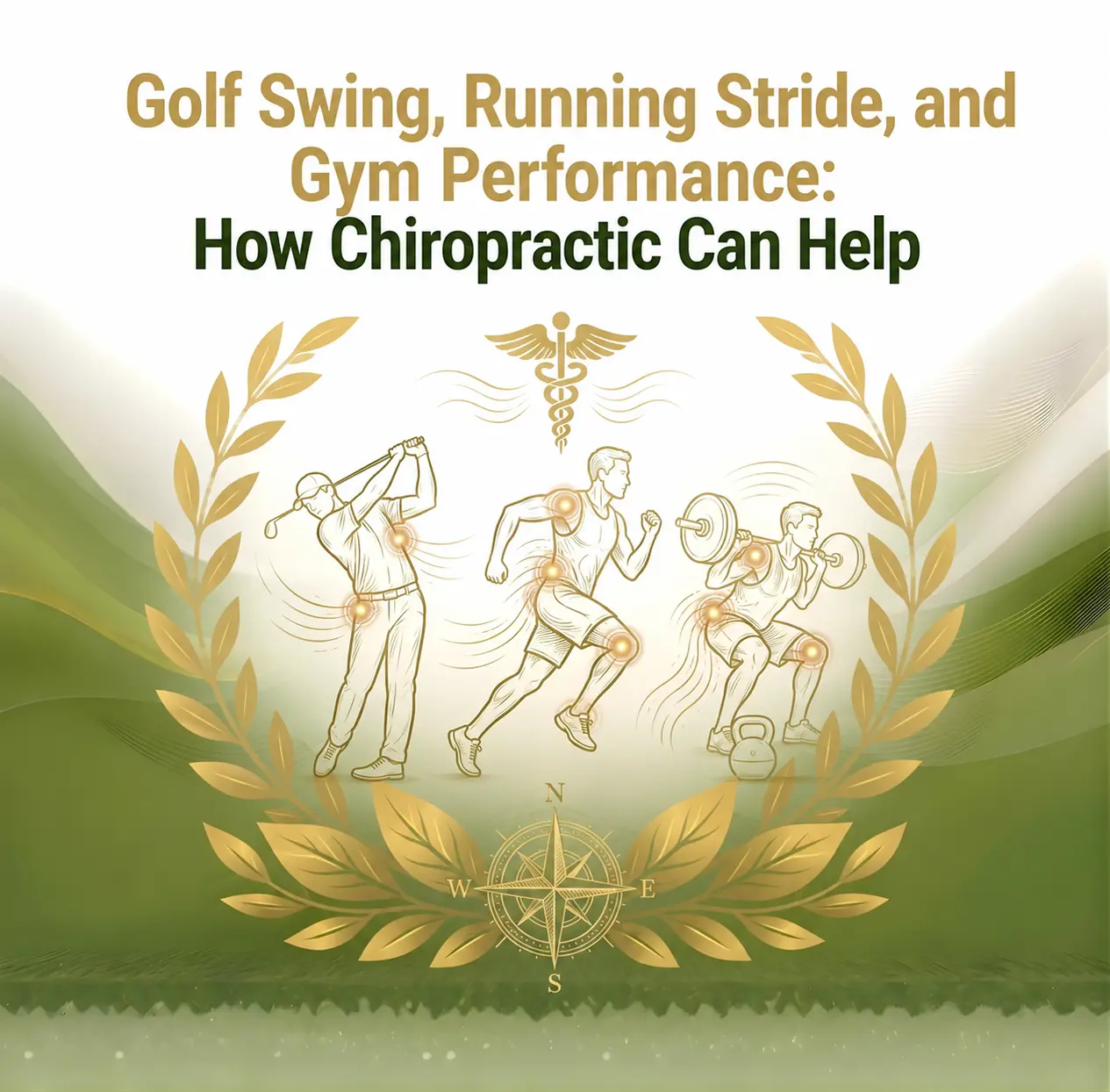
Golf Swing, Running Stride, and Gym Performance: How Chiropractic Can Help
A strong golf swing, efficient running stride, and solid gym performance all depend on the same foundation: how well your body moves. At Ribley Family Chiropractic, the goal is not just to reduce discomfort, but to help your body function with better mobility, stability, and control so you can move better in the activities that matter most.
Why Movement Quality Matters
Many people think performance is only about strength, conditioning, or practice. Those things matter, but they work best when your joints move well, and your body can coordinate force efficiently. When the spine, hips, pelvis, shoulders, or ankles are restricted, the body often compensates in ways that reduce power and increase stress on muscles and joints.
That is where chiropractic care can fit in. By focusing on alignment, joint motion, and nervous system function, chiropractic care may help improve the way your body transfers force from one area to another. For athletes and active adults, that can mean cleaner movement, less unnecessary strain, and better overall performance.
Chiropractic and the Golf Swing
A golf swing depends on rotation, timing, balance, and consistency. The swing starts from the ground and moves through the ankles, hips, spine, ribs, shoulders, and arms. If one part of that chain does not move properly, the body has to compensate elsewhere.
Limited hip rotation can force the lower back to overwork. Tight thoracic spine mobility can reduce the ability to rotate through the upper body. Shoulder stiffness can change swing mechanics and affect follow-through. Over time, these restrictions can make the swing less efficient and more stressful on the body.
Chiropractic care may help golfers move better by addressing joint restrictions and helping restore healthier motion in key areas. When the body moves more freely, it can be easier to rotate, load, and unwind with better control. This may support a smoother swing and reduce the chance of overcompensation in the back, shoulders, or wrists.
For golfers, the benefit is not just about power. Better mobility can also support consistency. A body that moves more predictably is often easier to repeat, which matters when precision counts more than brute force.
Common golf-related areas that may benefit from chiropractic care
- Thoracic spine mobility for rotation.
- Hip motion for loading and stability.
- Pelvic balance for swing control.
- Shoulder mechanics for a smoother backswing and follow-through.
- Neck and upper back comfort for posture and setup.
Chiropractic and Running Performance
Running may look simple, but it is one of the most repetitive and demanding movements the body performs. Every stride requires coordinated motion through the foot, ankle, knee, hip, pelvis, and spine. Small restrictions can change how force is absorbed and returned with each step.
If one hip does not extend well, the runner may compensate by using the lower back or the opposite leg. If ankle mobility is limited, stride mechanics can become less efficient. If pelvic control is poor, the body may waste energy with each step. These issues can affect pace, endurance, and comfort over time.
Chiropractic care can support runners by improving joint motion and helping the body move more efficiently through the running cycle. Better mobility and alignment may allow for a more natural stride, improved balance, and less unnecessary stress on overworked areas. For runners dealing with stiffness or recurring discomfort, that can make training feel more manageable.
Running performance is not only about speed. It is also about the economy. When movement is efficient, the body uses less energy to cover the same distance. That can help runners maintain form longer and recover more effectively after training.
Running areas that often need attention
- Foot and ankle mechanics for ground contact.
- Knee tracking and lower-body alignment.
- Hip extension and pelvic stability.
- Lower back motion under repeated impact.
- Postural balance for efficient forward movement.
Chiropractic and Gym Performance
In the gym, good performance depends on more than lifting strength. Proper mobility and control help you squat deeper with better form, press with less compensation, hinge safely, and generate force more effectively. If joints do not move well, the body often finds a shortcut that may reduce performance and increase strain.
A lifter with limited shoulder mobility may struggle with overhead pressing. A person with tight hips may lose depth or stability in squats. Restricted ankle motion can affect balance and posture in lower-body training. Even deadlift mechanics can be influenced by spinal and hip mobility.
Chiropractic care may help improve how the body moves during training by addressing restrictions that interfere with normal mechanics. When motion improves, exercise often becomes more efficient and more comfortable. That can support better form, better load transfer, and a lower risk of compensating during repetitive lifts.
For active people, this matters because training consistency is often the biggest driver of progress. If stiffness, discomfort, or movement limitation keeps interrupting workouts, results usually slow down. Keeping the body moving well may help you stay more consistent and train with greater confidence.
Gym movements that may be affected by mobility
- Squats, where hip, ankle, and spine motion all matter.
- Deadlifts, where hinge mechanics and trunk stability are critical.
- Overhead press, where shoulder and thoracic mobility support proper positioning.
- Bench press, where shoulder mechanics and upper-back control help form.
- Lunges and split squats, where balance and pelvic control influence symmetry.
How Chiropractic Care Supports Performance
Chiropractic care is often most effective when it is part of a larger plan. It is not a replacement for strength training, mobility work, rest, or proper coaching. Instead, it can complement those efforts by helping the body move with less restriction and better coordination.
One of the main goals is to restore motion where it has been lost. That can help reduce compensation patterns that build up over time from repetitive training, poor posture, desk work, or previous injuries. Another goal is to improve how the nervous system and musculoskeletal system work together so movement feels more natural and controlled.
For someone who golfs, runs, and trains in the gym, that combined effect can matter a lot. Golf needs rotation and balance. Running needs rhythm and stability. Gym work needs strength expressed through good mechanics. Chiropractic care can support all three by improving the physical foundation underneath them.
What a Care Plan May Include
A care plan at Ribley Family Chiropractic may involve a combination of adjustments, mobility-focused care, and guidance tailored to how you move and the activities you do. The exact approach depends on the person, their goals, and the areas that need the most attention.
The process often starts with understanding where motion is restricted and how that restriction affects daily life or performance. From there, care may focus on the spine, hips, shoulders, pelvis, or other areas involved in the activity. The goal is to make movement more efficient, not to create a one-size-fits-all solution.
For athletes and active adults, this kind of personalized care is important. A golfer does not move exactly like a runner, and a runner does not train the same way as a powerlifter. A good plan should reflect those differences and support the demands of each activity.
Signs You May Need Support
You do not need to be in severe pain to benefit from chiropractic care. In many cases, performance starts to decline before pain becomes obvious. Stiffness, uneven movement, and recurring tightness are often early signs that something in the body is not working as well as it should.
If your golf swing feels restricted, your stride feels uneven, or your gym lifts start to break down due to mobility issues, it may be time to look more closely. The same is true if you keep dealing with the same ache in your back, hips, shoulders, or neck after training.
Common signs include:
- Reduced rotation in the swing.
- Stiffness after running or lifting.
- Uneven stride or loss of rhythm.
- Tightness in the low back, hips, or shoulders.
- Difficulty maintaining good form under load.
Why Active Adults Benefit
Active adults often ask for more from their bodies than they realize. They sit for long periods, train hard, and repeat the same motions over and over. That combination can create small restrictions that add up over time.
Chiropractic care can be valuable because it addresses the body’s overall function. Instead of focusing only on the site of discomfort, it looks at how different parts of the body work together. That broader approach can be especially useful for people who want to stay active without letting stiffness or compensation patterns slow them down.
The benefit is practical. Better movement can support better performance, and better performance often makes exercise more enjoyable. When your body feels like it is working with you instead of against you, it is easier to stay committed to golf, running, and training.
Building Better Long-Term Results
The best results usually come from combining chiropractic care with smart habits outside the office. Mobility drills, strength training, recovery, and proper technique all help reinforce the work done during care. When those pieces are aligned, the body has a better chance of holding onto improvements.
For golfers, that may mean pairing care with rotational mobility and core stability work. For runners, that may mean foot strength, hip control, and recovery strategies. For gym-goers, that may mean movement prep, good lifting mechanics, and balanced training. Chiropractic care can support each of these goals by helping the body move more efficiently in the first place.
In the long term, the aim is not just to fix a problem once. It is to help you move well enough to keep doing the activities you enjoy with less interruption and more confidence.
Conclusion
Golf, running, and gym training each place different demands on the body, but they all rely on the same thing: efficient movement. Chiropractic care may help by improving joint mobility, reducing compensation, and supporting your body’s performance under real-life and athletic demands.
At Ribley Family Chiropractic, the focus is on helping patients move better so they can stay active, train smarter, and feel more capable in the activities that matter most. Whether your goal is a smoother golf swing, a stronger running stride, or better gym performance, chiropractic care can be a practical part of that plan.