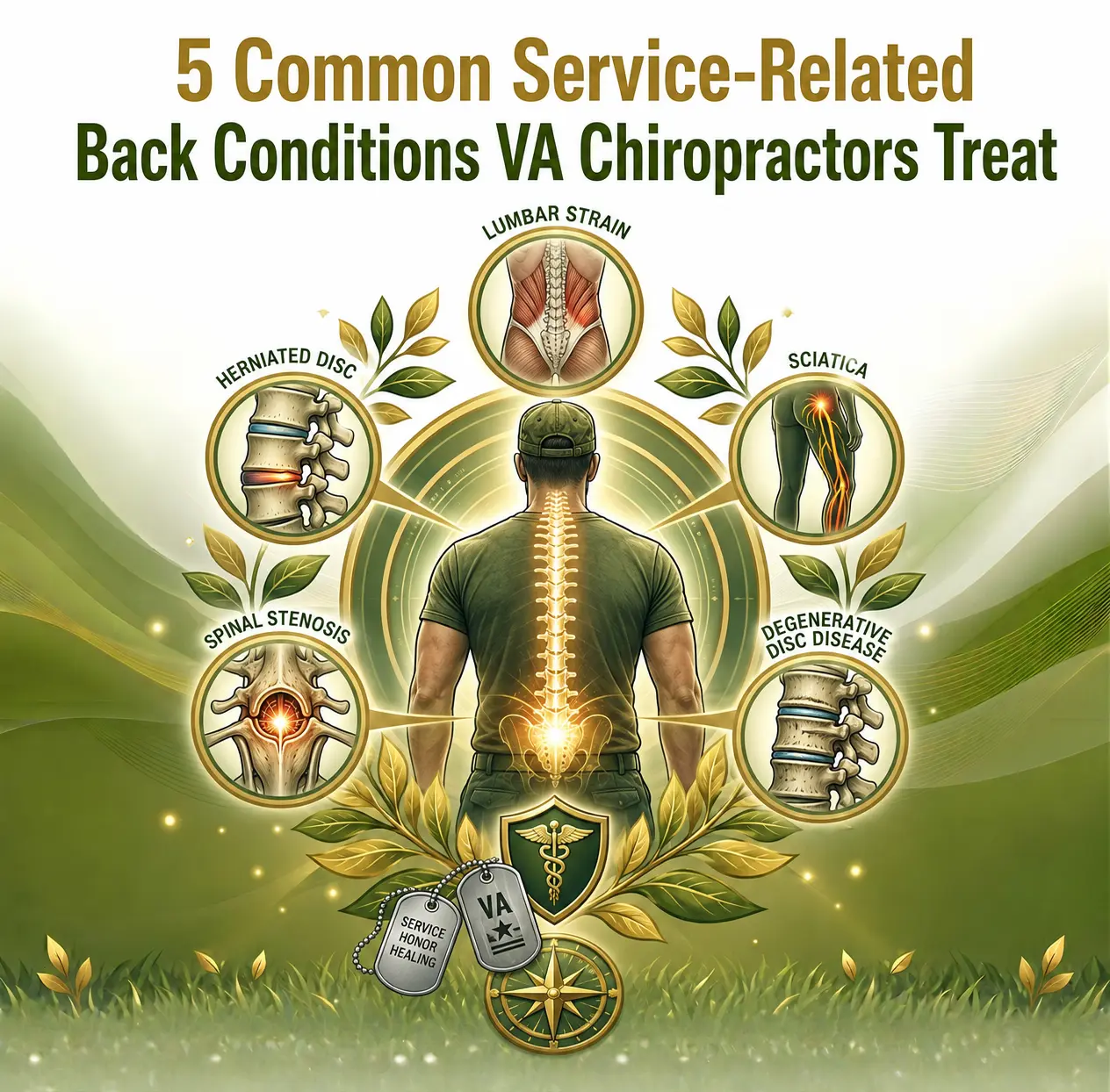
5 Common Service-Related Back Conditions VA Chiropractors Treat
5 Common Service-Related Back Conditions VA Chiropractors Treat
If you’ve served in the military, you already know that the physical demands of service don’t just disappear when you come home. Years of carrying heavy gear, enduring long missions, repetitive physical strain, and the impact of combat take a real toll on your spine and musculoskeletal system. The good news is that chiropractic care — available through VA benefits — offers meaningful, drug-free relief for many of these conditions.
At Ribley Family Chiropractic, we work with veterans who deserve targeted, effective care for the back pain and spine-related issues they’ve carried home from service. Understanding which conditions are most commonly treated helps you walk into your appointment informed and ready to get the care you need.
Why Veterans Experience Higher Rates of Back Pain
Military service puts the human body through mechanical stress that civilians rarely encounter. From parachute landings and load-bearing marches to sitting in cramped vehicle seats for extended periods, the spine absorbs an extraordinary amount of force over the course of a military career. Studies show that musculoskeletal conditions — with low back pain being the most frequent — are among the most common service-related diagnoses seen in veterans seeking VA care.
The VA has expanded access to chiropractic services precisely because the evidence supporting spinal manipulation and related therapies for these conditions continues to grow. What this means for veterans is that you no longer have to default to pain medication as a first-line solution. Chiropractic care addresses the structural root of the problem rather than simply masking the symptoms.
1. Low Back Pain From Mechanical Stress
Low back pain is, without question, the condition VA chiropractors see most often in veterans. It’s not hard to understand why. Years of heavy pack loads, awkward sleeping positions in the field, and physical training place chronic stress on the lumbar vertebrae — the five bones at the base of your spine that carry most of your body’s weight.
Mechanical low back pain typically results from misalignment of the vertebrae, which puts pressure on surrounding nerves and soft tissue. This pressure creates the familiar dull ache or sharp shooting pain that radiates through the lower back, hips, and sometimes down the legs. Chiropractic spinal manipulation works by restoring proper alignment to the vertebrae, reducing nerve irritation and allowing the surrounding muscles to stop compensating.
The difference chiropractic care makes for veterans with low back pain is often felt quickly. Many patients notice improved range of motion and reduced pain intensity within the first few sessions. For veterans who’ve been managing low back pain for years, this kind of progress can be genuinely life-changing.
What Chiropractic Treatment Looks Like for Low Back Pain
Treatment typically involves a combination of spinal adjustments, soft tissue massage to the surrounding musculature, and a home exercise plan designed to support the work done in the clinic. The goal isn’t just short-term relief — it’s restoring the function and stability of your lumbar spine so the pain doesn’t keep coming back.
2. Herniated or Bulging Discs
Between each vertebra in your spine sits a disc — a small, cushion-like structure that absorbs shock and keeps the bones from grinding against each other. When those discs are subjected to repeated trauma, heavy lifting, or prolonged compression, they can bulge outward or rupture entirely, pressing against the nerves that run through the spinal canal.
For veterans, herniated discs often develop gradually from years of high-impact activity, though they can also result from a single traumatic event. The symptom profile usually includes radiating pain, numbness, or tingling that travels from the site of the herniation down through the arms or legs, depending on where in the spine the disc is located.
Chiropractors treat herniated discs using several techniques. Spinal manipulation is often combined with the flexion-distraction technique, which gently stretches the spine to create more space between the vertebrae and reduce pressure on the affected disc. Ultrasound therapy and muscle stimulation may also be incorporated, depending on the severity and location of the herniation. The approach is always conservative, working with your body’s natural healing capacity rather than bypassing it.
When to Seek Care for Disc Issues
If you’re experiencing pain that shoots down your leg (often called sciatica), or if numbness and weakness in your extremities have become routine, these are signs of likely disc involvement. Early intervention through chiropractic care can prevent the condition from progressing to a point where surgical options are on the table.
3. Neck Pain and Cervical Spine Injuries
Veterans who’ve been in vehicle rollovers, experienced blast exposure, or worn heavy helmets and night-vision equipment for extended periods frequently deal with chronic neck pain and cervical spine dysfunction. The cervical spine — the seven vertebrae running through your neck — is one of the most vulnerable sections of the spine because it supports the full weight of your head while also allowing for a wide range of motion.
Neck pain in veterans often involves a combination of muscle tension, joint dysfunction, and nerve irritation at the cervical level. Left untreated, cervical spine issues don’t just cause local pain — they can also produce headaches, shoulder pain, and radiating arm symptoms, all of which compound over time.
Chiropractic adjustments to the cervical spine realign the joints, reduce muscle tension, and restore the neck’s natural curve. This is particularly relevant for veterans whose posture has been altered by years of wearing heavy gear that pulls the head and shoulders forward. Correcting that alignment takes direct, skilled manual work — exactly the kind that chiropractic care provides.
4. Tension Headaches Linked to Spinal Dysfunction
Many veterans don’t immediately connect their chronic headaches to their spine, but the link is well-established. Tension headaches — the type that creates a tight, pressing sensation across the forehead and temples — are often driven by stress and dysfunction in the cervical spine and the muscles surrounding it.
When the upper cervical vertebrae are misaligned, the muscles at the base of the skull tighten to compensate. That tension travels upward and forward, creating headache patterns that can be almost daily in frequency for some veterans. The temptation is to manage this with over-the-counter pain relievers, but that approach treats the symptom without ever addressing the cervical dysfunction causing it.
Chiropractors treat tension headaches with a combination of cervical spine adjustments, soft tissue therapy targeting the muscles at the base of the skull and upper neck, and specific exercises that strengthen the deep cervical flexors. Veterans who’ve been dealing with regular headaches for years often find that consistent chiropractic care dramatically reduces both the frequency and intensity of their episodes.
The Posture Connection
Poor posture developed over years of military service — whether from carrying heavy loads, hunching over equipment, or spending long hours in vehicles — is a major contributor to cervical dysfunction and, by extension, chronic headaches. Addressing the postural root cause is a core part of what good chiropractic care accomplishes.
5. Arthritis-Related Back Stiffness
Repetitive physical stress over a military career doesn’t just cause acute injuries — it accelerates the wear on spinal joints that eventually leads to arthritis. The facet joints between your vertebrae can develop osteoarthritis, which causes stiffness, reduced mobility, and a dull aching pain that tends to be worse in the morning or after periods of inactivity.
Veterans with service-related arthritis in the spine often describe a grinding or stiffness sensation when they first get up, or difficulty performing activities that require bending and twisting. Over time, the inflammation and mechanical changes associated with arthritis can cause significant limitations in daily function.
While chiropractic care can’t reverse arthritis, it manages the condition effectively and slows functional decline. For patients without active joint swelling, chiropractors can perform targeted adjustments to reduce mechanical irritation that contributes to pain, along with ultrasound therapy, electrotherapy, and low-level laser therapy to address inflammation and stiffness. The practical result is less pain and more mobility — which, for a veteran dealing with progressive joint degeneration, translates directly to quality of life.
Why Early Intervention Matters
The longer arthritis-related spinal changes go unmanaged, the more compensatory patterns develop in the surrounding muscles and joints. Early chiropractic intervention helps keep the spine functioning as well as possible and prevents compensatory patterns from creating secondary problems throughout the kinetic chain.
Understanding Your VA Chiropractic Benefits
Veterans who receive care through the VA have access to chiropractic services, and those with service-connected musculoskeletal conditions may qualify for coverage of treatment for any of the five conditions described above. The VA’s expansion of chiropractic services reflects a broader shift toward non-pharmacological pain management — a recognition that spinal manipulation and related therapies produce real, measurable outcomes for veterans.
If you’re navigating VA benefits and looking for a chiropractor experienced in working with veterans, the most important thing is finding a provider who understands both the clinical complexity of service-related injuries and the specific processes involved in VA-authorized care.
At Ribley Family Chiropractic, we take both of those seriously.
The conditions veterans present with are rarely simple. They’re often layered — low back pain complicated by disc issues, neck pain intertwined with tension headaches, and arthritis layered on top of years of mechanical stress. Effective treatment requires a thorough evaluation, a clear treatment plan, and a practitioner who communicates well about what they’re finding and what they’re doing about it.
What to Expect at Your First Chiropractic Visit
Your first visit at Ribley Family Chiropractic starts with a comprehensive intake that covers your service history, the nature and timeline of your symptoms, any previous treatments you’ve tried, and your current functional limitations. This intake informs a physical examination of your spine, posture, range of motion, and neurological function.
From that evaluation, a treatment plan is built around your specific presentation — not a generic protocol. Veterans with service-related conditions often need an approach that accounts for multiple areas of dysfunction simultaneously, and that requires a clinician who’s paying close attention to the full picture.
Treatment sessions themselves are straightforward. Spinal adjustments are performed with controlled, targeted force applied to specific vertebral segments. Many patients notice immediate changes in mobility or pain levels following an adjustment, though the full therapeutic benefit typically develops over the course of treatment.
Conclusion
Service-related back conditions don’t have to define your life after the military. Whether you’re dealing with chronic low back pain, disc problems, neck dysfunction, persistent headaches, or arthritis-related stiffness, chiropractic care delivers a direct, evidence-informed path toward better function and less pain — without defaulting to medication as the primary answer.
At Ribley Family Chiropractic, we understand the physical cost of military service. We’re here to help veterans get the structural care they need, navigate their VA benefits, and build a treatment plan that actually addresses the root cause of their pain. If you’re a veteran ready to take the next step toward real relief, contact us to schedule your evaluation. You’ve served — now let us help you recover.