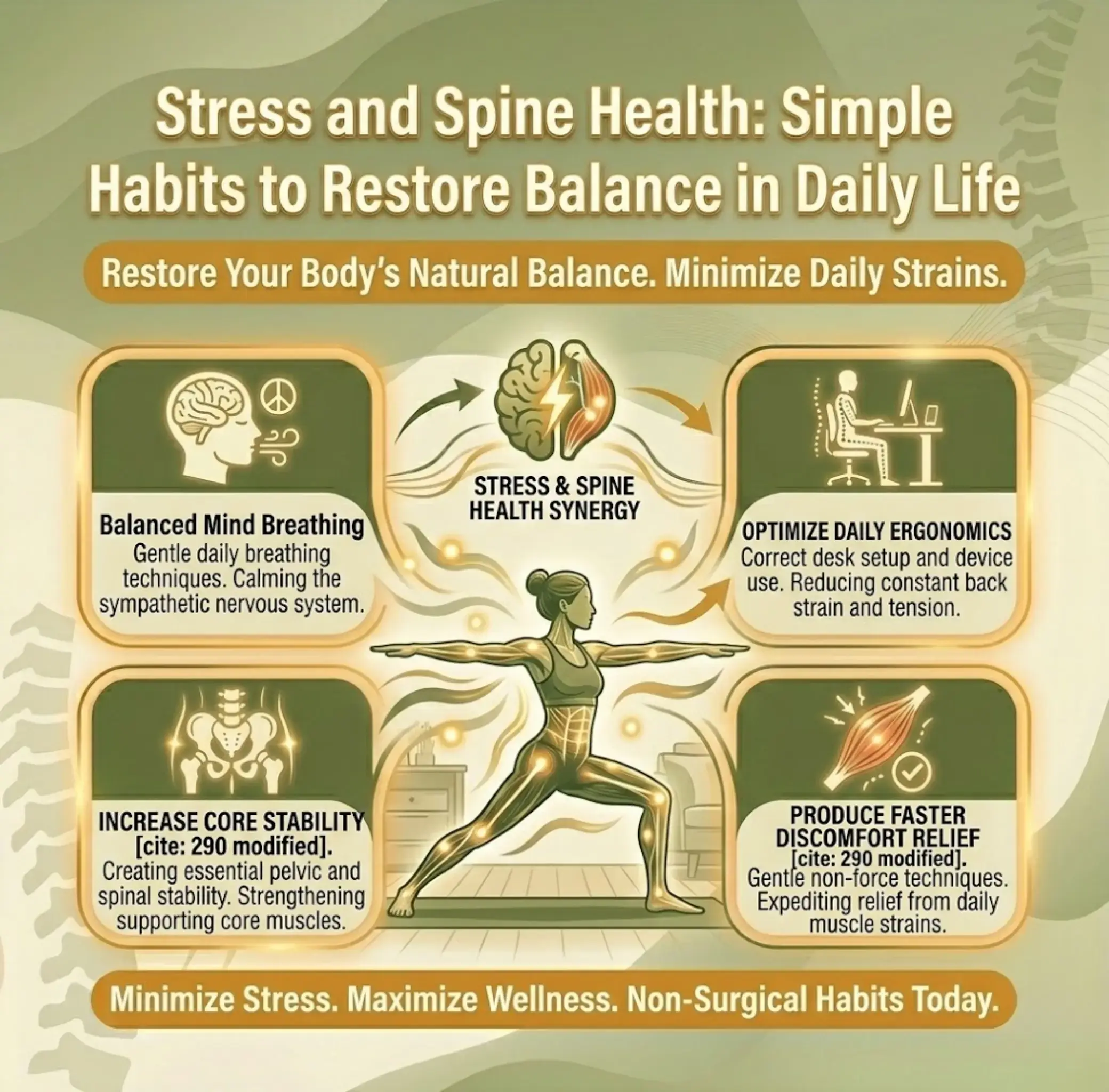
Stress and Spine Health: Simple Habits to Restore Balance in Daily Life
Daily stress accumulates silently, tightening muscles and straining the spine in ways most people overlook. For Woodstock residents juggling work, family, and community life, this tension often manifests as neck stiffness, lower back pain, or nagging headaches. The spine, central to posture and nervous system function, bears much of this burden, disrupting overall balance and well-being.
Simple, intentional habits can interrupt this cycle, realigning the body and calming the mind. These practices restore spinal health while building resilience against stress, helping you move through busy days with greater ease and vitality.
The Stress-Spine Connection Explained
Stress triggers the body’s fight-or-flight response, flooding muscles with tension to prepare for action. In modern life, this response lingers without release, causing chronic contraction in the neck, shoulders, and lower back. Over time, these patterns pull spinal joints out of alignment, compressing nerves and reducing mobility.
The spine houses the spinal cord, a key highway for nervous system signals. When stress-induced tightness misaligns vertebrae—even subtly—it interferes with these signals, amplifying fatigue, poor sleep, and emotional strain. This creates a feedback loop: spinal discomfort heightens stress, which further tenses muscles.
Breaking this cycle starts with awareness. Recognizing how prolonged sitting, emotional pressure, or poor sleep posture affects the spine empowers targeted changes. Daily habits that promote relaxation and alignment counteract these effects, fostering long-term equilibrium.
How Chronic Stress Damages Spinal Health
Prolonged stress elevates cortisol, which inflames tissues and weakens spinal support structures like discs and ligaments. Tight trapezius muscles in the upper back pull the head forward, overloading cervical vertebrae and leading to forward head posture. Similarly, hip flexors shorten from desk work, tilting the pelvis and straining lumbar curves.
These imbalances don’t resolve on their own. Without intervention, they progress to conditions like facet joint irritation or degenerative changes. Woodstock professionals spending hours at computers or driving between appointments face heightened risk, as static positions exacerbate muscle imbalances.
The good news lies in prevention. Consistent habits reduce inflammation, maintain spinal curves, and enhance resilience, turning vulnerability into strength.
Posture Awareness: The First Line of Defense
Good posture acts as a stress buffer, distributing body weight evenly across the spine. Start by checking alignment hourly: ears over shoulders, shoulders over hips, hips over ankles. This neutral stance minimizes disc pressure and muscle overuse.
During phone calls or commutes, hold devices at eye level to avoid forward tilt. At desks, position screens so the top aligns with your gaze, keeping elbows at 90 degrees. These micro-adjustments prevent the slouch that compresses thoracic vertebrae and strains neck extensors.
Over weeks, posture awareness rewires habits. You’ll notice reduced upper back fatigue and fewer tension headaches, as the spine supports natural curves without constant muscular compensation.
Breathing Exercises for Instant Tension Release
Deep diaphragmatic breathing directly counters shallow stress breathing, which elevates shoulder tension and restricts rib cage motion. Practice this: inhale slowly through the nose for four counts, expanding the belly, then exhale for six counts, feeling the spine elongate.
Perform three rounds every morning or during traffic stops. This oxygenates spinal tissues, relaxes paraspinal muscles, and stimulates the parasympathetic nervous system for calm. Woodstock parents rushing school drop-offs find it transformative—five minutes restores spinal freedom before the day intensifies.
Regular practice improves lung capacity, enhancing oxygen delivery to vertebrae and discs, which supports nutrient exchange and reduces degenerative stress.
Daily Movement Breaks to Mobilize the Spine
Sedentary hours calcify spinal stiffness. Counter this with 2-3 minute movement breaks every hour: stand, roll shoulders back, then perform cat-cow stretches on all fours, arching and rounding the back gently.
These motions lubricate facet joints, counteract forward flexion from screens, and reset pelvic tilt. Walk briskly for five minutes post-meal, swinging arms to engage the full spine. Such habits prevent adhesions in spinal ligaments, maintaining fluidity essential for stress resilience.
Woodstock walkers on local trails naturally incorporate this, turning routine strolls into spinal maintenance that boosts mood and posture simultaneously.
Ergonomic Adjustments for Work and Home
Optimize your environment to support spinal neutrality. Desk chairs should allow feet flat on the floor, knees at 90 degrees, with lumbar support hugging the lower back curve. Standing desks alternate positions hourly, preventing hip flexor lockdown.
In cars, adjust seats to maintain a 100-110 degree hip angle, using a small towel roll for lumbar fill. Sleep on your side with a pillow between your knees to preserve spinal alignment overnight. These setups reduce gravitational stress, letting recovery happen passively.
Families benefit too—ensure kids’ backpacks weigh under 10% of body weight, distributed evenly, to safeguard developing spines from stress-induced slouch.
Targeted Stretches for Stress-Tightened Areas
Focus stretches on high-stress zones. For neck relief, tilt ear to shoulder gently, holding 20 seconds per side, three times daily. This elongates scalenes and levator scapulae, easing cervical pressure.
Lower back tension responds to seated forward folds: hinge at hips, reaching toward shins, breathing deeply for one minute. Piriformis stretches—crossing ankle over opposite knee—release deep gluteal muscles pinching the sacroiliac joint.
Incorporate child’s pose daily: kneel, fold forward, arms extended, forehead to floor. This decompresses the entire spine, inviting relaxation into tight tissues. Consistency yields measurable looseness within days.
Strengthening Core and Back Muscles for Stability
Weak core muscles force the spine to overcompensate under stress. Build endurance with planks: hold forearm plank 20-30 seconds, progressing weekly, engaging abs without arching the back.
Bird-dog exercise strengthens erector spinae—on all fours, extend opposite arm and leg, holding five breaths. Dead bugs target transverse abdominis: lie supine, lower opposite limbs slowly without pelvic rock.
These isometrics stabilize vertebrae dynamically, reducing sway during stressful days. Woodstock gym-goers integrate them seamlessly, enhancing both performance and spinal fortitude.
Key foundational exercises include:
- Plank variations for anterior stability
- Bird-dog for posterior chain balance
- Dead bug for deep core activation
Hydration and Nutrition for Spinal Resilience
Dehydration stiffens discs, amplifying stress tension. Aim for half your body weight in ounces of water daily, sipping consistently. Magnesium-rich foods—leafy greens, nuts, dark chocolate—relax muscles and support nerve health.
Anti-inflammatory omega-3s from salmon or walnuts reduce cortisol-spurred swelling around spinal joints. Vitamin D from sunlight or fortified foods strengthens bone density, preventing stress fractures in vertebrae.
These internals fortify the spine structurally, complementing external habits for holistic balance.
Mindfulness and Journaling to Lower Stress Load
Mental habits influence physical tension. Start evenings with three-minute mindfulness: scan from head to toe, noting and releasing tightness. This interrupts rumination that sustains muscle guarding.
Journal stressors daily, then list three gratitudes. This shifts nervous system tone, easing autonomic overdrive that compresses spinal curves. Woodstock meditators pair it with breathwork, amplifying spinal decompression.
Over months, reduced baseline stress lightens the spine’s load, preventing chronic patterns.
Sleep Optimization for Spinal Recovery
Poor sleep posture exacerbates daily stress. Use a medium-firm mattress contouring natural curves. Elevate head slightly for acid reflux, avoiding stomach sleeping that hyperextends lumbar spine.
Wind down with dim lights and no screens 90 minutes pre-bed, preserving melatonin for tissue repair. Quality sleep allows spinal discs to rehydrate overnight, countering daytime compression.
Building a Sustainable Daily Routine
Stack habits for adherence: morning breathwork with coffee, desk stretches hourly via phone alarms, evening journaling before bed. Track progress weekly—noting pain levels, energy, posture—to refine.
Woodstock’s community trails invite group walks, blending social support with movement. Consistency compounds: small actions restore spinal balance, diminishing stress’s cumulative toll.
Real-Life Transformation Through Simple Habits
Consider Lisa, a Woodstock teacher plagued by desk-induced neck pain and anxiety. Implementing posture checks, breathing breaks, and bird-dogs transformed her days. Within six weeks, headaches vanished, energy rose, and spinal scans showed improved alignment.
Her story reflects countless locals rediscovering vitality through accessible practices.
When to Seek Professional Support
Habits lay groundwork, but persistent pain signals deeper issues. Chiropractic assessments detect subtle misalignments, pairing adjustments with your routine for accelerated gains. Woodstock clinics offer stress-spine packages, blending care with education.
Conclusion
Stress erodes spine health stealthily, but simple habits reclaim balance effectively. From posture vigilance and targeted stretches to core strength and mindful breathing, these practices interrupt tension cycles, realign the body, and nurture resilience.
Woodstock residents thrive by weaving them into daily rhythms—restoring not just spinal integrity, but overall harmony. Start small today; your spine, and sanity, will thank you with renewed freedom and calm.