Heavy Backpacks and Back Pain: What Woodstock Parents Need to Know
Heavy Backpacks and Back Pain: What Woodstock Parents Need to Know
School mornings move fast. Between breakfast, getting out the door, sports gear, lunch boxes, laptops, and homework folders, it is easy for a child’s backpack to become one more thing that gets loaded without much thought. For many Woodstock parents, the backpack only becomes a concern when a child starts complaining about sore shoulders, an aching neck, or pain across the lower back after school.
That concern is worth taking seriously. Heavy or improperly worn backpacks can contribute to back pain in children, and growing spines are more vulnerable to strain because children are still developing physically. Research reviewed in 2025 also found a strong association between heavy backpack use and musculoskeletal pain in school-age children, especially in the neck, shoulders, upper back, and lower back. In other words, backpack discomfort is not just about annoyance or posture in a school photo; for some kids, it becomes a daily mechanical stress that affects how they stand, walk, and feel by the end of the day.
From a chiropractic and spine-health perspective, the real issue is not simply that a bag feels heavy. The problem is how that weight changes a child’s body mechanics over time. When a backpack pulls backward, children often lean forward or arch their backs to compensate, and that shift can place extra stress on the muscles and structures that support the spine. Add in long walks between classes, uneven loading, or wearing the bag over one shoulder, and the strain can build day after day.
This matters because back pain in children and teens is more common than many parents assume. One spine health source reports that by age 14, 30% of girls and 26% of boys experience acute or subacute low back pain, while 11% report chronic back pain lasting longer than three months. The same source notes that by age 17, 13% of girls and 26% of boys report chronic low back pain. A backpack is not the only possible cause, but it is one of the most visible, modifiable factors in a child’s daily routine.
Why heavy backpacks create real back problems
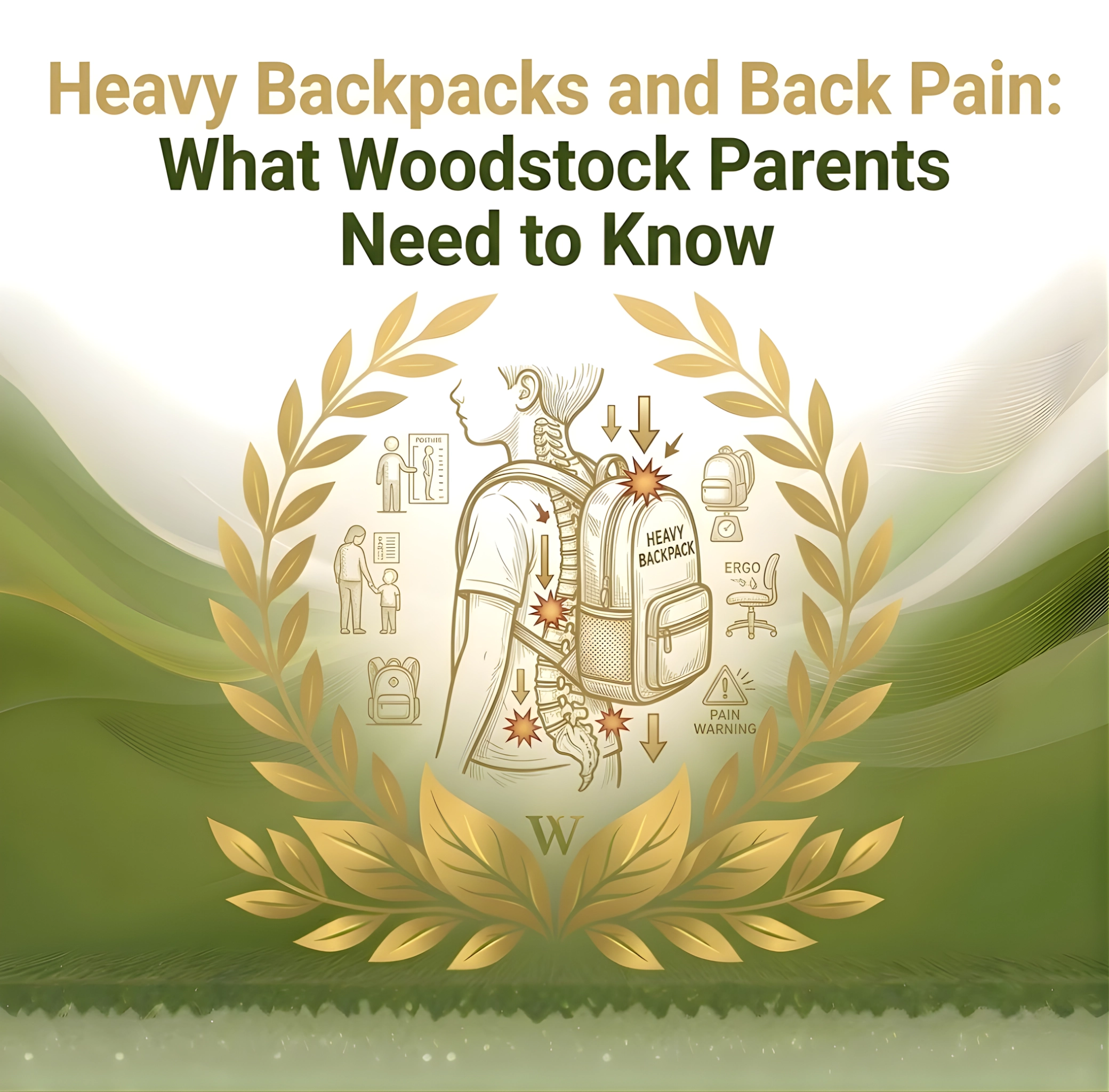
A child’s backpack affects more than the shoulders. When the load is too heavy, the weight tends to settle toward the bottom of the bag, which increases pressure on the back and on the supportive muscles of the spinal column. That can lead to neck pain, shoulder pain, and back pain, especially when the child carries the bag for long periods or rushes across campus with poor posture. Stony Brook Medicine also notes that heavy backpacks can contribute to poor posture, muscle strain, and added joint stress, not just in the back but also in the hips and knees.
That postural shift is one of the clearest warning signs. A heavy backpack can cause a child to hunch forward to offset the load, and that compensation may become more obvious by the end of the week when fatigue sets in. If the bag is routinely too heavy, the body adapts by tightening some muscles and overworking others, which can leave a child feeling sore even after the backpack is off. This is one reason some parents hear, “My back hurts,” even when there was no fall, sports injury, or single moment that seemed to trigger the pain.
Duration matters too. The 2025 systematic review found that not only weight, but also how the backpack is carried and how long it is worn, plays a role in musculoskeletal pain. That means a bag that seems manageable for a short walk from the driveway to the school door may become a different problem when a child wears it for repeated trips through hallways, stairs, bus stops, and after-school activities. Lack of locker access can make the issue worse because students may have to carry most of what they need for the entire day.
For Woodstock parents, that practical point is important. A backpack is not just a container for books. It is a daily load placed on a body that is still growing, and the load often increases as students move into higher grades, carry larger devices, or juggle athletics, music, and other programs. That is why a small complaint after school deserves a closer look before it turns into a pattern.
How posture changes under load
When a backpack is too heavy, the body has to create balance somehow. According to spine health guidance, the extra weight pulls the child backward, and the child may respond by leaning forward or arching the back to stay upright. This altered posture can place extra stress on spinal joints and the surrounding muscles, which helps explain why some children describe tightness across the shoulders while others complain about aching lower back pain.
These changes can also affect movement quality. Stony Brook Medicine notes that because a heavy backpack shifts balance, children may be more likely to trip, fall, or strain themselves when they are rushing between classes or walking up stairs. That detail often gets overlooked, but it matters because fatigue and awkward mechanics do not stay isolated to the spine; they can change the way a child moves through the entire school day.
How much backpack weight is too much?
One of the most useful starting points for parents is simple: know the numbers. Mayo Clinic says adults and children should not carry more than 15% of their body weight in a backpack, and gives the example that a 60-pound child should carry less than 9 pounds. A pediatric spine source gives a stricter example, stating that a 70-pound child should carry no more than 7 pounds. Those examples show why many families are surprised when they actually weigh a packed school bag and realize it is far heavier than expected.
The 2025 review strengthens that concern. It found that backpack weights exceeding roughly 15% of a child’s body weight are particularly associated with postural changes and muscular strain. That same review also identified carrying method, duration of use, and limited awareness of backpack ergonomics as contributing factors that can amplify the problem. In practical terms, a child does not need to be carrying an extreme load for the bag to become a problem; a moderate load repeated every school day can still create stress when the fit, posture, or timing is poor.
Another important point is that many students may already be above the recommended range. One source reports that students carry an average of 15% of their body weight in backpacks. If your child is also bringing home a laptop, a full water bottle, winter gear, sports clothing, or project materials, the total can climb quickly. That is why weighing the full backpack at home is one of the simplest and most useful first steps a parent can take.
Signs Woodstock parents should watch for
Backpack-related strain does not always show up as a dramatic complaint. Sometimes it appears as subtle, repeatable patterns that are easy to dismiss until they become routine. Research and clinical guidance point to several warning signs that deserve attention.
- Your child leans forward, rounds the shoulders, or changes posture noticeably while wearing the backpack.
- Your child reports soreness, tightness, or fatigue in the neck, shoulders, upper back, or lower back after school.
- You notice red marks, rubbing, or skin irritation where the backpack contacts the body.
- Your child seems off balance, struggles on stairs, or wants to remove the backpack immediately because it feels too heavy.
Pain location can also help parents connect the dots. The review of school backpack research found that the most commonly affected areas are the neck, shoulders, upper back, and lower back. That means a child who complains mainly about shoulder tightness or neck soreness may still be dealing with a backpack problem, even if they never use the words “back pain.” It also means that focusing only on the low back can cause parents to miss the broader mechanical pattern.
The timing of symptoms matters as well. If discomfort increases as the week goes on, improves over the weekend, or appears right after carrying school materials, the backpack should move higher on the list of likely contributors. That does not prove it is the only cause, but it is a strong reason to assess weight, fit, and carrying habits instead of assuming the pain is simply part of growing up.
What parents can do right away
The good news is that backpack-related strain is one of the easier daily stressors to address because parents can measure it, adjust it, and monitor the results. Since the evidence links pain not only to load but also to carrying method and duration, the goal is to reduce total stress on the child’s spine from several angles at once.
Start with the full backpack, not the empty one. Weigh it on a home scale on a normal school day, then compare that number to your child’s body weight. If the bag is over the recommended limit, remove anything that does not need to travel back and forth every day. This one habit often reveals how much weight comes from extra notebooks, duplicate supplies, metal water bottles, or gear that has been sitting in the bag for weeks.
Next, pay attention to how the backpack is worn. The 2025 review specifically identifies the method of carrying, including using one strap versus both straps, as a factor in musculoskeletal pain. A backpack worn over one shoulder creates an uneven load, which forces the body to compensate on one side and can increase strain through the shoulder girdle, mid-back, and low back. Encouraging both straps, a snug fit, and keeping the bag high enough that it does not hang excessively low can reduce that uneven pull during the school day.
It also helps to think about weight distribution inside the bag. Heavier items should sit closer to the child’s back rather than slumping to the far outside of the pack. That setup reduces the lever effect that makes a backpack feel even heavier and more awkward than the scale suggests. Parents can also create a simple nightly reset: remove unnecessary items, repack intentionally, and check whether tomorrow’s schedule really requires everything currently inside.
Duration is the other part of the equation. Since longer wear time is linked to more strain, it helps to reduce how long the backpack stays on the body whenever possible. If your child has access to a locker, encourage using it. If not, talk through their daily schedule and see whether some materials can stay in class, be stored in another approved location, or be carried separately only when needed. Even small reductions in wear time can matter when repeated over an entire school year.
Footwear and walking habits also shape how backpack stress feels. A child who is rushing in flimsy shoes while carrying a heavy, low-hanging bag has a very different movement pattern from a child walking in supportive shoes with a balanced load. Parents do not need to turn every school day into a posture drill, but they can look for practical wins: lighter load, better fit, both straps, less unnecessary carrying time, and regular check-ins about how the body feels after school.
When pain should not be ignored
A mild complaint after a long day may improve quickly once the backpack issue is corrected. Still, persistent pain deserves attention, especially if it keeps returning, affects sleep, changes your child’s activity level, or causes them to avoid sports, play, or normal movement. That is where an E-E-A-T approach matters: parents need useful guidance, but they also need to know the limits of home fixes.
Evidence shows that heavy backpacks can contribute significantly to musculoskeletal pain, but they are not the only possible source of a child’s discomfort. If pain continues even after reducing the load and improving carrying habits, a professional evaluation can help determine whether the issue is mechanical strain, posture-related tension, joint irritation, or something else that needs a different kind of care. Framing the problem early can prevent months of guessing.
For chiropractic offices serving Woodstock families, this is where education matters most. The conversation should not be limited to “Is the backpack too heavy?” It should also include how the child carries it, how long they carry it, where the pain shows up, whether posture changes are visible, and whether symptoms improve when the backpack is lighter. Those details turn a vague complaint into something parents can act on.
Why this matters for long-term spinal health
Parents are right to care about more than temporary soreness. The reason backpack habits matter is that they are repeated over hundreds of school days during years of growth. Heavy backpack use has been linked with postural changes, muscular strain, and pain in multiple regions of the upper and lower body. When those forces repeat daily, the body learns compensations that can become a child’s “normal” way of standing and moving.
That does not mean every heavy backpack leads to a serious injury. It does mean parents should treat backpack pain as a modifiable stressor rather than an unavoidable part of school life. The strongest message from the current evidence is practical: weight matters, how the bag is carried matters, and how long a child carries it matters. Those are factors families can address without waiting for a bigger problem to develop.
Conclusion
Heavy backpacks may look like a normal part of school, but the evidence shows they can place real stress on a child’s neck, shoulders, back, posture, and overall movement, especially when the load is too heavy, carried unevenly, or worn for long periods. Guidance from pediatric spine and orthopedic sources consistently points to the same message: keep the load within a reasonable percentage of body weight, watch for visible posture changes and soreness, and take complaints seriously instead of assuming kids will simply grow out of them.
For Woodstock parents, the most effective next step is usually not complicated. Weigh the bag, reduce what is inside, make sure your child uses both straps, and pay attention to patterns in pain, fatigue, and posture. If discomfort keeps returning, it is worth getting a professional opinion so your child is not carrying the same problem from one school year into the next. A backpack should help your child get through the day, not make their body pay for it.