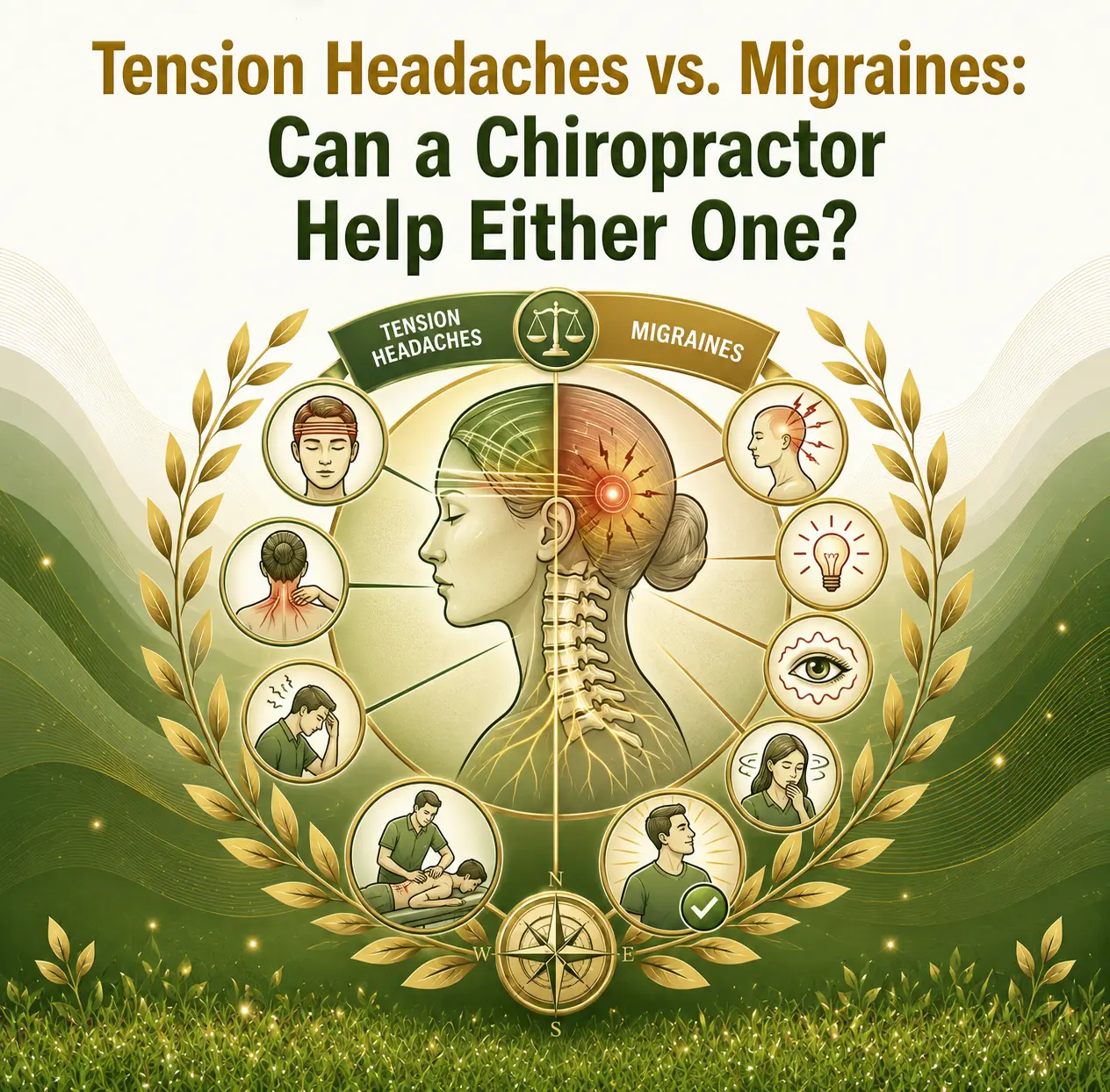
Tension Headaches vs. Migraines: Can a Chiropractor Help Either One?
If you’ve ever had to lie down in a dark room because your head was pounding, or reached for pain relievers more times than you’d like to admit, you already know how disruptive headaches can be. But not all headaches are the same — and the type you’re dealing with matters a great deal when it comes to finding real, lasting relief. Two of the most common culprits are tension headaches and migraines, and while they share some surface-level similarities, they’re quite different in how they feel, why they happen, and how they’re best treated.
At Ribley Family Chiropractic, one of the most frequent questions we hear from new patients is whether chiropractic care can actually help with headaches. The short answer is yes — but the fuller answer involves understanding what’s driving your headaches in the first place. This article breaks down the key differences between tension headaches and migraines, explains the spinal and neurological connections behind each, and outlines what the research says about chiropractic care as a treatment option.
Understanding Tension Headaches
Tension headaches are the most common type of headache experienced by adults. Most people describe them as a dull, steady pressure or tightening sensation — like a tight band wrapped around the head. Unlike migraines, the pain tends to affect both sides of the head and centers around the forehead, temples, or the back of the skull where the neck connects.
Tension headaches can last anywhere from 30 minutes to several days, and while they’re uncomfortable, most people can still carry on with their daily activities through one. They don’t typically cause nausea, vomiting, or sensitivity to light and sound — symptoms that are much more characteristic of migraines. The pain is rarely described as severe. It’s more of a persistent, grinding discomfort that chips away at your ability to focus and function.
The most common triggers for tension headaches include stress, poor posture, prolonged screen time, eye strain, and muscle tension in the neck and shoulders. That last one is particularly relevant to chiropractic care, because muscle tension and restricted movement in the cervical spine are frequently identified as direct contributors to tension-type headache patterns. When the muscles and joints of the neck are under chronic stress — whether from sitting at a desk all day or carrying tension from anxiety — they refer pain upward into the head in recognizable ways.
Understanding Migraines
Migraines are a different category altogether. Rather than a simple headache, a migraine is a neurological condition involving a complex group of symptoms that vary from person to person. The pain is typically described as severe, throbbing, or pulsating, and it most commonly affects one side of the head — though it can shift sides or spread. Migraine episodes can last anywhere from 4 to 72 hours, and the pain is often significant enough to completely halt normal activity.
What makes migraines particularly distinct is the range of accompanying symptoms. Nausea, vomiting, and extreme sensitivity to light and sound are hallmark features. Many migraine sufferers also experience an “aura” — a neurological warning phase that can include visual disturbances such as flashing lights or blind spots, tingling sensations in the face or hands, or temporary difficulty with speech. These aura symptoms typically appear 20 to 60 minutes before the headache itself begins.
Migraine triggers are wide-ranging and deeply individual. Hormonal fluctuations, disrupted sleep, certain foods and drinks (particularly aged cheese, alcohol, and caffeine), bright or flickering lights, strong smells, and high-stress situations are all well-documented triggers. For people who experience migraines frequently, the condition can become a serious quality-of-life issue that interferes with work, relationships, and basic functioning regularly.
The Spinal Connection: Why Your Neck Matters for Both
Here’s something that surprises many people: both tension headaches and migraines often have a meaningful connection to the cervical spine — the seven vertebrae that make up your neck. The suboccipital region, which sits at the base of your skull and the top of your neck, is a dense area of muscles, joints, and nerve roots. When these structures become irritated, compressed, or restricted, they don’t just produce local neck pain. They refer pain directly to the head.
This type of headache — one that originates in the cervical spine and radiates upward — is called a cervicogenic headache. It’s distinct from both tension headaches and migraines, but it commonly coexists with them or mimics their symptoms closely enough to be misidentified. Up to one-quarter of all headaches are believed to be referred from the cervical spine, which is a significant number.
For tension headaches specifically, the connection to the neck is direct. Chronic tightness in the upper trapezius, levator scapulae, and suboccipital muscles — all of which attach near or at the cervical spine — is a primary driver of the dull, pressure-based pain that characterizes this headache type. When these muscles stay contracted due to poor posture, stress, or joint restriction, they pull on the soft tissue attachments at the base of the skull and send referred pain into the head.
For migraines, the cervical connection is more complex but equally real. The trigeminal nerve, which is the primary nerve pathway involved in migraine pain, has a nucleus that extends into the upper cervical spinal cord. Dysfunction and inflammation in the cervical spine can sensitize this system, potentially lowering the threshold for migraine onset or making existing migraines worse. Addressing cervical dysfunction through chiropractic care doesn’t cure migraines, but it can reduce one of the contributing factors that makes the condition worse.
What the Research Says About Chiropractic and Headaches
Tension Headaches
The research on chiropractic care for tension headaches is nuanced. Published evidence-based guidelines indicate that spinal manipulation cannot be confidently recommended as a stand-alone treatment for episodic tension-type headaches, but low-load craniocervical mobilization — a gentler form of manual therapy targeting the upper cervical joints — has shown benefit for longer-term management of both episodic and chronic tension headaches. The distinction matters: these are not the same technique, and chiropractors trained in headache management will select approaches based on the specific presentation rather than a one-size-fits-all protocol.
Soft tissue work, trigger point therapy, and postural correction — all core components of chiropractic care — directly address the muscular contributors to tension headaches. Patients who come in with chronic tension-type headaches tied to poor workstation ergonomics, forward head posture, or chronic neck muscle tightness often see meaningful improvement when these underlying drivers are corrected through hands-on care and guided rehabilitation.
Migraines
The evidence base for chiropractic care and migraines is growing and, for many patients, promising. A meta-analysis of studies examining spinal manipulation therapy found that it significantly reduced the number of migraine days compared to control groups, along with reductions in migraine pain intensity. For migraine, published clinical guidelines specifically recommend spinal manipulation and multimodal multidisciplinary interventions, including massage, for the management of both episodic and chronic migraine.
Earlier studies produced particularly encouraging results. A controlled clinical trial found that 22% of patients who received chiropractic care reported more than a 90% reduction in migraine frequency after just two months of treatment. A separate study found that chiropractic care reduced the severity of migraine pain by an average of 68%. These numbers don’t apply to every patient, and migraine treatment is inherently individual — but they reflect the real impact that spinal care can have for a meaningful segment of migraine sufferers.
It’s worth being transparent about the state of the research: some more recent systematic reviews note that larger, more rigorously controlled trials are still needed to fully quantify the effect size of spinal manipulation for migraines. Chiropractic care is not a cure for migraines, and it works best as part of a comprehensive management approach rather than a sole intervention. What the evidence does support is that, for many patients, it provides clinically significant relief and represents a safe, non-pharmaceutical option worth exploring.
Cervicogenic Headaches
This is where chiropractic care has some of its strongest evidence. For headaches that originate from the cervical spine, spinal manipulation is directly recommended as the treatment of choice. A 2016 research study involving 110 headache patients found that those who received cervical and thoracic spinal adjustments experienced significantly greater reductions in headache intensity, frequency, duration, and disability compared to those who received only mobilization and exercise — and these results were maintained at three-month follow-up.
What a Chiropractic Visit for Headaches Looks Like at Ribley Family Chiropractic
When a headache patient comes into Ribley Family Chiropractic, the process starts with a thorough intake evaluation. Understanding the pattern of your headaches — their location, frequency, duration, triggers, and associated symptoms — is the foundation of a useful treatment plan. A physical examination assesses posture, cervical range of motion, joint mobility, muscle tension, and neurological function to identify where the dysfunction lies.
Spinal Adjustments
Chiropractic adjustments to the cervical and thoracic spine restore proper joint mobility, reduce nerve irritation, and relieve the muscular tension that feeds into headache patterns. For patients whose headaches have a clear cervicogenic component, this is often the most directly impactful intervention in the treatment plan.
Soft Tissue and Trigger Point Therapy
Many headache patients carry significant trigger points in the upper trapezius, suboccipitals, and levator scapulae — tight nodules of muscle that actively refer pain into the head and neck. Hands-on soft tissue work targeting these areas directly addresses one of the most common physical contributors to chronic headaches. Combined with joint adjustment, this approach covers both the skeletal and muscular dimensions of the problem.
Postural Correction and Ergonomic Guidance
Since forward head posture, prolonged sitting, and poor workstation setup are major drivers of both tension headaches and cervicogenic headaches, addressing the daily environment is a critical part of lasting relief. At Ribley Family Chiropractic, we provide practical ergonomic guidance tailored to your specific work and home setup so that the improvements made in the treatment room aren’t undone by hours spent in a problematic posture.
Lifestyle and Trigger Management
For migraine patients, part of the care process involves identifying and systematically reducing personal triggers. Sleep consistency, hydration, meal timing, stress management, and screen habits all feed into migraine frequency. Chiropractors work alongside patients to build healthier daily routines that support neurological stability and reduce the likelihood of triggering episodes.
When to Seek Care
Many people normalize chronic headaches because they’ve had them for so long. They reach for over-the-counter medication, push through the pain, and assume it’s just part of life. But frequent headaches are not normal — they’re a signal that something in the body needs attention.
You should consider scheduling an evaluation at Ribley Family Chiropractic if:
- You experience headaches more than twice per week on average
- Your headaches consistently begin in the neck or base of the skull
- You notice that your headaches worsen after prolonged sitting, desk work, or screen time
- Your neck has a restricted range of motion or chronic stiffness
- You’ve been relying on pain medication regularly to manage headache symptoms
- Your migraines have been increasing in frequency or intensity
Conclusion
Tension headaches and migraines are two distinct conditions with different mechanisms, symptoms, and treatment needs — but both have meaningful connections to the cervical spine and the muscular structures that support it. Chiropractic care addresses these connections directly through spinal adjustments, soft tissue therapy, postural correction, and personalized lifestyle guidance.
The research supports chiropractic care for cervicogenic headaches most strongly, shows real promise for migraine management through spinal manipulation, and demonstrates value for tension headaches through manual mobilization and addressing the muscular root causes. None of this means chiropractic care is a universal cure — but for patients who are tired of managing symptoms with medication and want to treat the physical source of their headaches, it represents a credible, evidence-informed path forward.
If headaches are a regular part of your life, you don’t have to just live with them. Schedule a consultation with Ribley Family Chiropractic and find out what’s actually driving your pain — and what we can do to help you get lasting relief.