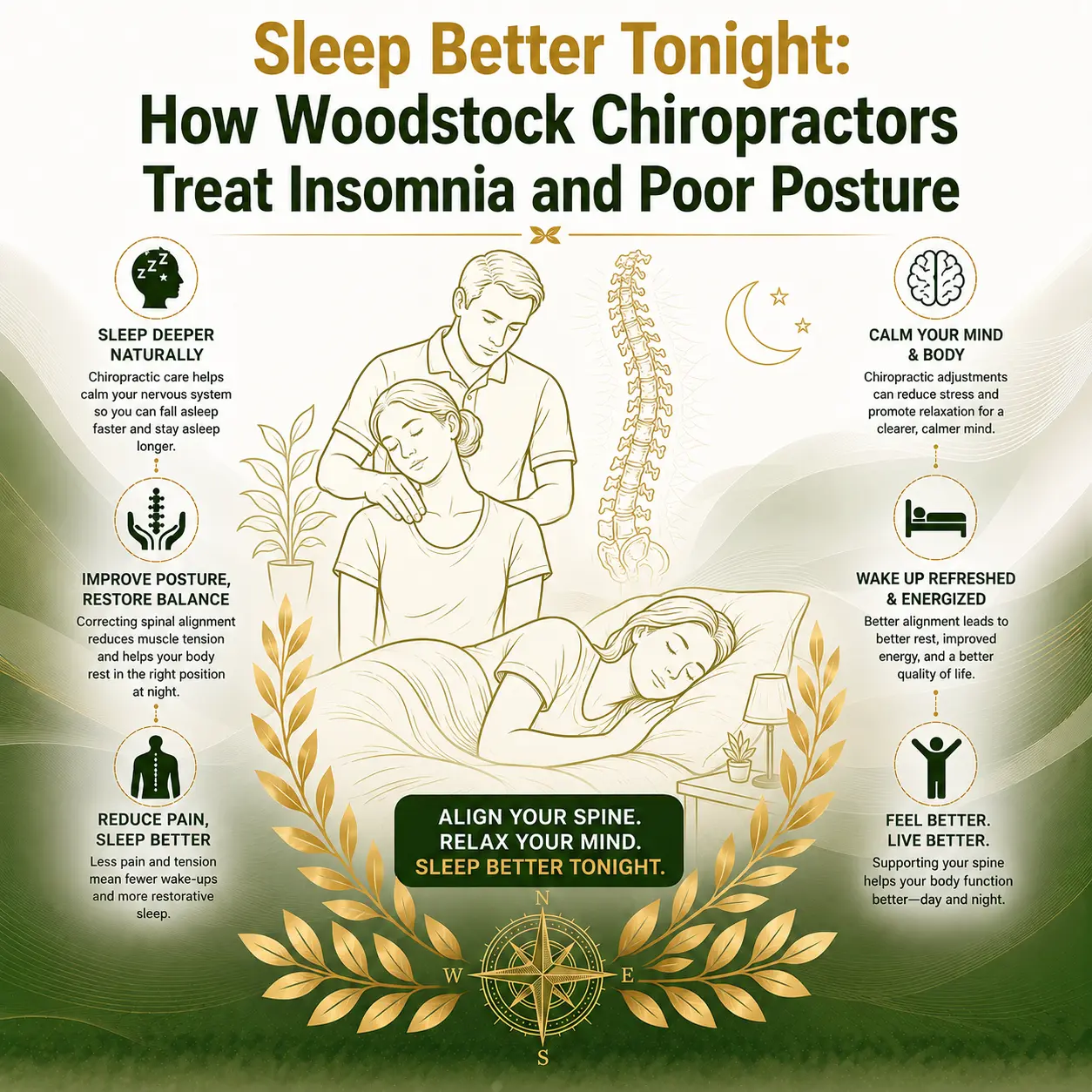
Sleep Better Tonight: How Woodstock Chiropractors Treat Insomnia and Poor Posture
Poor sleep and poor posture often travel together. When your spine is under constant strain, your muscles stay tense, your nervous system stays on alert, and your body has a harder time settling into deep rest. For many Woodstock patients, chiropractic care offers a practical way to address both problems at once by reducing spinal irritation, easing tension, and helping the body relax enough to sleep.pmc.ncbi.nlm.nih+2
Why Posture Affects Sleep
Posture influences more than how you look at a desk or on a phone call. When your head sits too far forward, your shoulders round, or your lower back stays compressed for long periods, the muscles that support your spine have to work harder than they should. That ongoing strain can leave you feeling sore at night, but it can also keep your nervous system from downshifting into the calm state needed for restful sleep.thewoodstockchiropractor+1
Bad posture also changes how your body handles daily stress. A spine that is constantly compensating creates more tension in the neck, back, and shoulders, which can lead to headaches, stiffness, and difficulty getting comfortable in bed. If you toss and turn because no position feels right, the issue may not just be your mattress. It may be the way your body has adapted to sitting, working, driving, and scrolling all day.
The Sleep-Stress Connection
Insomnia rarely comes from one cause alone. Stress, pain, nervous system overactivity, and muscle tension can all feed into one another, creating a loop that is hard to break without treating the physical source of the problem. If your body stays braced through the evening, your brain has a harder time recognizing that it is safe to rest.
That is where chiropractic care can help. By improving spinal alignment and reducing nerve irritation, adjustments may help the body let go of built-up tension and settle into a more relaxed state. Some patients notice they fall asleep faster once their neck and back stop fighting them at night, while others simply wake up less often because their body is no longer so uncomfortable.
How Chiropractors Approach Insomnia
Chiropractors do not treat insomnia as a sleep problem alone. They look at the structure beneath it: posture, spinal motion, muscle tension, pain, and nervous system function. If your spine is not moving well or if your posture is creating chronic strain, those physical issues can make it harder for your body to enter a restful sleep cycle.
A typical chiropractic visit starts with a postural and spinal assessment. Some chiropractors examine standing posture from the feet up, since imbalances in the lower body can show up in the neck and shoulders later on. Others use movement testing, X-rays if necessary, and hands-on evaluation to find the source of the strain before building a care plan.
What Treatment Looks Like
Treatment often includes gentle spinal adjustments aimed at restoring better alignment and motion. When the spine moves more freely, the nervous system is less likely to stay in a heightened, irritated state that can interfere with sleep. Chiropractors may also use posture correction strategies, corrective exercises, and advice on how to reduce the daily habits that keep your body stuck in the same strained position.
In many cases, the goal is not just temporary relief. Corrective care focuses on improving long-term stability and function by addressing the posture and movement patterns that keep creating the problem. That matters for insomnia because if your body keeps returning to the same stressed position every day, the sleep issue will keep coming back too.
Signs Poor Posture May Be Affecting You
You do not need dramatic pain to have a posture problem. In fact, many people with posture-related sleep issues mostly notice smaller symptoms that add up over time. Neck tension, upper back soreness, headaches, and a stiff feeling when you first get out of bed are all common clues.turningpointfamilychiropractic+1
You may also notice that sleep gets worse on days when you sit a lot, drive more, or spend too much time looking down at a screen. That pattern matters because it suggests a mechanical issue rather than random insomnia. If your body feels tight at night and tired in the morning, your posture may be part of the reason.
Some common posture-related warning signs include:
-
Forward head posture or rounded shoulders.
-
Tightness between the shoulder blades.
-
Recurring neck pain or stiffness.
-
Trouble finding a comfortable sleeping position.
-
Morning headaches or a heavy, tired feeling on waking.
These symptoms often build slowly, which is why people ignore them until sleep becomes a real problem. By then, the body has usually been compensating for quite some time, and the surrounding muscles have adapted to the stress.
Why Chiropractic Can Help Sleep
The connection between chiropractic care and better sleep is mostly about reducing the physical barriers that keep the body from relaxing. A chiropractic adjustment can reduce nerve irritation by improving spinal alignment and motion, which may lead to less pain and better overall function. When pain drops and the body feels less guarded, sleep tends to come more naturally.
There is also a nervous system component. Chiropractic care may help the body move out of a constant stress response and into a calmer state that supports recovery and rest. That does not mean an adjustment is a sleep pill. It means the body may finally have a chance to settle down once the physical tension is addressed.
What Makes Woodstock Care Different
Many Woodstock chiropractors focus on corrective care rather than short-term symptom relief alone. That approach is especially relevant for insomnia linked to posture because sleep problems often return when the underlying mechanical stress returns too. Corrective care is built around long-term change, not a quick fix that fades by the next stressful week.
At Ribley Family Chiropractic, the focus is on the relationship between the spine, posture, and overall function, with treatment designed to support the nervous system and reduce the strain that accumulates in daily life. The clinic’s broader family approach also matters because posture and sleep problems rarely affect just one person in a household. Parents, kids, and teens often develop related issues from the same routines, screen habits, and stress patterns.
Simple Changes That Support Better Results
Chiropractic care can do a lot, but the biggest sleep improvements usually come when treatment is paired with better daily habits. If your posture is part of the problem, the habits that shaped it need attention too. That includes how you sit at work, how often you look down at your phone, and how you arrange your sleep space.
A few changes often help reinforce chiropractic care:
-
Keep screens closer to eye level instead of looking down for long periods.
-
Use a chair and desk setup that supports a neutral spine.
-
Avoid sleeping in positions that twist the neck or compress the lower back.
-
Take short movement breaks during long work sessions.
-
Follow the posture or corrective exercises your chiropractor recommends.
These changes sound simple, but they are often what make the difference between short-lived relief and real progress. Your body responds best when the care you get in the office is backed by the way you move the rest of the day.
When to Get Checked
If you have been dealing with insomnia for weeks and your body also feels tight, sore, or out of alignment, a chiropractic evaluation is worth considering. The same goes for people whose sleep problems seem to worsen with long workdays, driving, or screen time. When poor posture and poor sleep show up together, there is usually a physical reason worth addressing.
It is also worth getting checked if you wake up with neck pain, headaches, or a stiff back almost every morning. Those symptoms often point to a body that never fully relaxed overnight. Instead of assuming the issue is just stress or aging, it helps to look at how your spine and posture might be driving the problem.
Conclusion
Insomnia and poor posture are often connected, and chiropractic care can help address both by improving spinal alignment, reducing nerve irritation, and easing the tension that keeps the body from resting well. For Woodstock patients, that makes chiropractic a practical option when sleep problems seem tied to discomfort, stiffness, or long hours spent in unhealthy positions. If your nights feel restless and your body feels tight, a posture-focused chiropractic evaluation can be a smart first step toward sleeping better tonight.