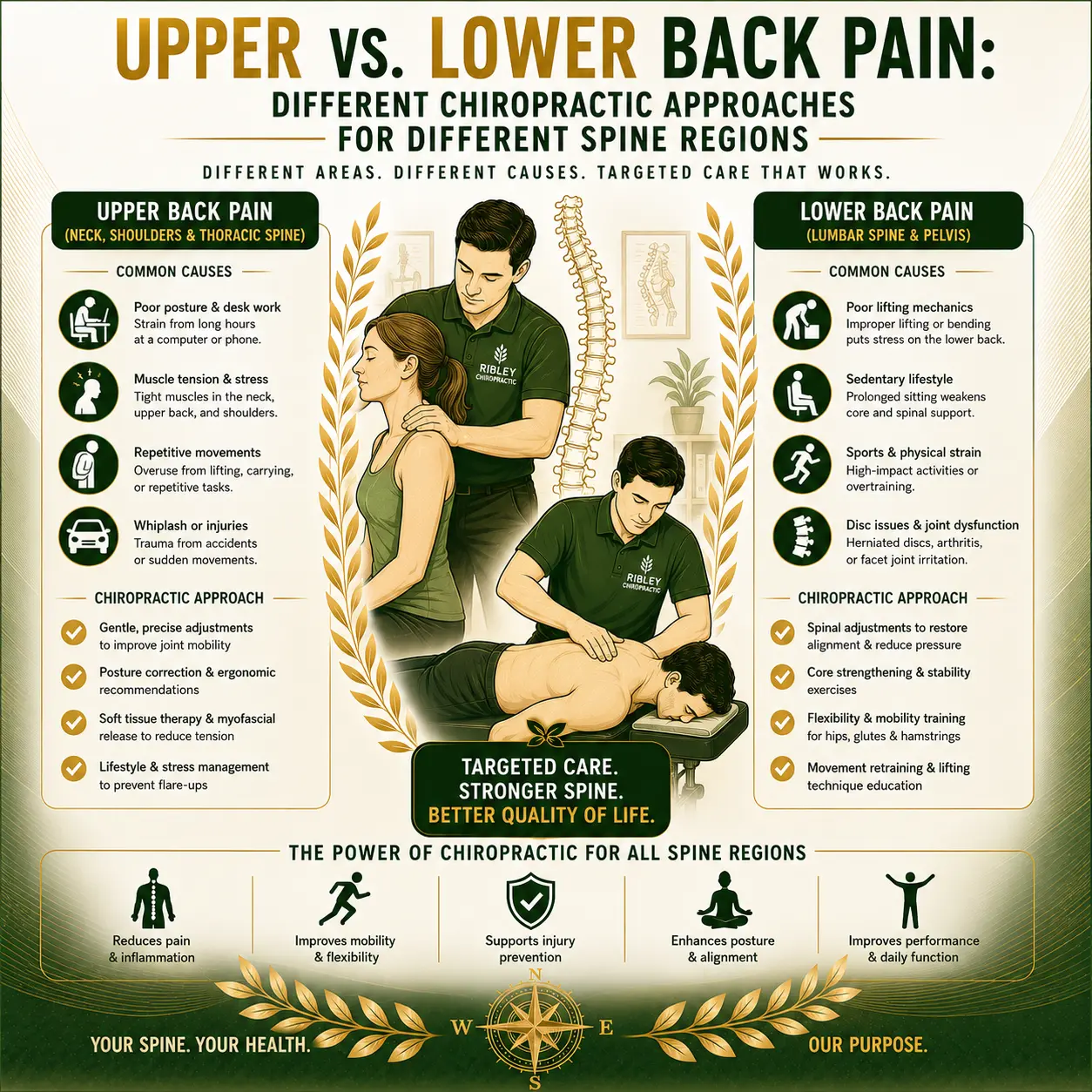
Upper vs Lower Back Pain: Different Chiropractic Approaches for Different Spine Regions
Back pain is often discussed as though it were one condition, but pain between the shoulder blades is not the same as pain near the beltline. The upper and lower portions of the spine have different structures, movement patterns, and responsibilities. They are also exposed to different types of strain throughout the day.
Upper back pain frequently develops alongside prolonged computer work, rounded shoulders, limited thoracic mobility, repetitive arm movements, or tension around the neck and shoulder blades. Lower back pain is more closely connected to weight-bearing, lifting, bending, hip movement, pelvic control, and the forces placed on the spine when you sit, walk, exercise, or work.
These differences matter during chiropractic care. A chiropractor should not apply the same examination, adjustment, or exercise plan to every person who reports back pain. Care should be based on where the pain is located, which movements aggravate it, whether nerves are involved, and what physical demands the patient faces each day.
At Ribley Family Chiropractic in Woodstock, Georgia, back pain care begins with a musculoskeletal examination and an individualized plan rather than a standardized series of adjustments. Depending on the findings, care may include spinal adjustments, decompression, active therapies, massage, corrective exercises, and movements patients can perform at home.
Understanding how upper and lower back pain differ can help you recognize why an accurate assessment is an important first step.
Understanding the Different Regions of the Spine
The spine is divided into several regions. The cervical spine forms the neck, the thoracic spine extends through the upper and middle back, and the lumbar spine forms the lower back. Below the lumbar region are the sacrum and pelvis.
The thoracic spine contains 12 vertebrae and connects with the rib cage. The lumbar spine contains five larger vertebrae designed to carry more of the body’s weight. These anatomical differences explain why the upper and lower back respond differently to posture, movement, injury, and treatment.
The Thoracic or Upper Back
The upper back generally refers to the area extending from the base of the neck to the bottom of the rib cage. It includes the thoracic vertebrae, ribs, muscles surrounding the shoulder blades, spinal joints, ligaments, and nerves.
The thoracic spine is naturally less mobile than the neck and lower back because the ribs provide stability and help protect the heart and lungs. Although this stability is useful, it means stiffness can develop when a person spends long periods sitting, driving, looking at a screen, or working with the arms positioned in front of the body.
Pain may appear directly over the spine, between the shoulder blades, along one side of the upper back, or around the rib area. Some people experience a dull ache, while others notice a sharp sensation during rotation, reaching, or deep breathing.
The Lumbar or Lower Back
The lower back extends from the bottom of the rib cage to the upper portion of the pelvis. The lumbar vertebrae are larger than the thoracic vertebrae because they support more weight and absorb substantial force during daily movement.
The lumbar spine allows forward bending, backward bending, and some side bending and rotation. It must remain stable while transferring force between the upper body, pelvis, and legs. This makes the region vulnerable to strain during lifting, prolonged sitting, repetitive bending, sudden twisting, or exercise performed without adequate control.
Lower back pain may stay near the spine or spread into the buttock, hip, thigh, lower leg, or foot. Radiating pain, numbness, tingling, or weakness may indicate that a nerve is irritated and requires a more detailed evaluation.
Why Upper and Lower Back Pain Feel Different
Pain location is only one part of the picture. The way the pain behaves often provides important clues about which joints, muscles, or nerves may be involved.
Upper back discomfort is frequently described as tightness, burning, fatigue, pressure, or aching around the shoulder blades. It may build gradually during desk work or driving and improve when the person changes position. In other cases, it appears suddenly after lifting, pulling, falling, or making a forceful upper-body movement.
Lower back discomfort is often described as stiffness, soreness, catching, throbbing, or sharp pain during bending and standing. Some patients feel worse after sitting, while others struggle with walking, lifting, rolling over in bed, or rising from a chair.
Neither pattern identifies a diagnosis by itself. A chiropractor must consider the complete history and examination rather than deciding that all shoulder-blade pain comes from posture or that all lower back pain comes from a disc.
Common Causes of Upper Back Pain
Upper back pain can develop when the thoracic joints, ribs, muscles, or nearby areas are not moving or sharing physical stress effectively. The cause may be a recent injury, but symptoms often develop gradually.
Prolonged Sitting and Screen Use
Working at a computer can place the arms in front of the body for several hours. As fatigue develops, the head may drift forward and the shoulders may round. Muscles around the shoulder blades then work harder to support the upper body.
The problem is not that there is one universally “perfect” posture. The larger concern is remaining in the same position for too long. Even a well-designed workstation cannot replace regular movement.
A person may notice that symptoms appear late in the workday, improve during weekends, or temporarily decrease after stretching. These patterns can help the chiropractor determine whether postural endurance and workstation habits are contributing factors.
Limited Thoracic Mobility
The upper back should be able to extend and rotate during reaching, walking, exercising, and many athletic movements. When thoracic mobility decreases, the neck, shoulders, or lower back may compensate.
For example, a golfer with limited upper-back rotation may generate more movement from the lower back. A person reaching overhead may arch the lumbar spine because the thoracic region does not extend adequately. Treatment may therefore need to improve movement in the stiff region rather than concentrating only on the area that hurts most.
Shoulder-Blade Muscle Strain
Muscles connecting the spine, ribs, neck, and shoulder blades can become irritated after repetitive pulling, carrying, lifting, or overhead work. Sudden increases in exercise volume may also contribute.
Pain from these tissues may be sensitive to pressure and may worsen when the arm moves. Because shoulder conditions and upper-back conditions can produce overlapping symptoms, the examination should include both regions.
Rib-Joint Irritation
Each rib connects to the thoracic spine. Irritation or restricted movement around these joints may cause localized pain near the spine or discomfort that travels along the rib.
Symptoms may increase with twisting, coughing, reaching, or deep breathing. However, pain associated with breathing should not automatically be assumed to be a rib or muscle problem. Chest pressure, difficulty breathing, fever, or unexplained severe pain requires medical evaluation.
Neck-Related Pain
The source of pain is not always where the discomfort is felt. Irritation in the lower neck may refer pain into the upper back or shoulder-blade region.
A chiropractor may examine neck movement, reflexes, sensation, muscle strength, and arm symptoms even when the patient describes the problem as upper back pain. This helps distinguish a localized thoracic problem from a condition involving the cervical spine or a nerve.
Common Causes of Lower Back Pain
The lower back manages forces from nearly every full-body activity. Walking, lifting, getting out of a chair, carrying a child, exercising, and even coughing require the lumbar region and surrounding muscles to control movement.
Muscle or Ligament Strain
A lower back strain can occur after lifting, twisting, slipping, or performing unfamiliar physical activity. It can also develop gradually when tissues are repeatedly loaded without enough recovery.
The pain may remain localized and feel worse during specific movements. Some people experience muscle guarding or spasms that make standing upright difficult.
Pain intensity does not always reflect the amount of tissue damage. Protective muscle tension can make a relatively minor strain feel severe, particularly during the first few days.
Joint Irritation and Reduced Movement
The small joints behind the lumbar vertebrae help guide movement. These joints may become irritated by repetitive extension, rotation, prolonged positions, or age-related changes.
Some people feel worse when leaning backward or standing for extended periods. Others feel discomfort on one side near the spine. The chiropractor may use movement testing and gentle pressure to determine whether a particular joint pattern reproduces the patient’s symptoms.
Disc-Related Pain
Spinal discs act as cushions between the vertebrae. A disc can become sensitive because of injury, age-related changes, repeated loading, or a combination of factors.
Disc-related discomfort may remain in the lower back or travel into a leg if nearby nerve tissue becomes irritated. Sitting, bending, coughing, or lifting may worsen symptoms in some cases, but these responses vary considerably.
Disc changes on an MRI do not automatically explain a person’s pain. Imaging findings can be present in people without symptoms, which is one reason routine imaging is not recommended for every case of nonspecific lower back pain. Imaging is generally considered when severe or progressive neurological problems are present, a serious condition is suspected, or the results would change treatment decisions.
Hip and Pelvic Movement Problems
The hips and pelvis strongly influence how force passes through the lumbar spine. Limited hip mobility, reduced gluteal strength, or poor control during squatting and lifting can increase stress on the lower back.
This does not mean that every patient with back pain has “weak glutes” or a misaligned pelvis. The chiropractor must test whether hip or pelvic movement actually contributes to that patient’s symptoms.
Nerve Irritation and Sciatica-Like Symptoms
Pain that spreads from the lower back or buttock into the leg may involve a lumbar nerve root. Patients may also report tingling, numbness, burning, or weakness.
Radiating symptoms require additional neurological testing. The chiropractor may assess reflexes, sensation, leg strength, walking ability, and whether certain positions increase or decrease the symptoms. Progressive weakness or changes in bowel or bladder control require urgent medical attention.
How a Chiropractic Assessment Changes by Spine Region
A useful chiropractic assessment does more than identify the painful spot. It examines how the region moves, how surrounding areas contribute, and whether the symptoms indicate a problem that should be referred for medical evaluation.
Assessing Upper Back Pain
For upper back symptoms, the chiropractor may evaluate thoracic rotation and extension, rib movement, neck mobility, shoulder motion, shoulder-blade control, breathing mechanics, and muscle endurance.
The examination may also consider the patient’s work position, driving habits, exercise routine, sleep position, and history of falls or collisions. Someone who develops pain after six hours at a computer may need a different approach from someone whose symptoms began after a sports injury.
Because the thoracic region connects with the ribs and sits near the chest, the chiropractor must remain alert for symptoms that do not fit a mechanical pattern. Pain accompanied by shortness of breath, fever, chest pressure, unexplained weakness, or illness should not be treated as an ordinary joint restriction.
Assessing Lower Back Pain
A lower back examination often includes lumbar bending, extension, side bending, hip movement, pelvic control, leg strength, sensation, reflexes, balance, and walking mechanics.
The chiropractor may observe how the patient sits, stands, squats, lifts, or transitions from the floor. These activities can reveal movement strategies that are not obvious when the patient is lying on an examination table.
If pain travels into the leg, nerve-related testing becomes particularly important. The goal is to identify whether the symptoms behave like localized mechanical back pain, nerve irritation, hip-related pain, or another condition requiring additional evaluation.
Chiropractic Approaches for Upper Back Pain
Upper back care often focuses on restoring comfortable thoracic and rib movement while reducing the strain placed on the neck and shoulder-blade muscles.
Thoracic Mobilization or Adjustment
When examination findings indicate reduced joint movement, a chiropractor may use mobilization or an adjustment directed at a specific thoracic segment. The technique, force, and patient position should be selected according to the person’s age, health history, comfort, and physical findings.
Not every upper back problem requires a forceful adjustment. Lower-force techniques may be more appropriate for patients with significant sensitivity, osteoporosis risk, recent injury, or other clinical considerations.
Spinal manipulation involves applying controlled force to a spinal joint, while mobilization uses slower movement within the joint’s normal range. Both approaches should be performed by an appropriately trained and licensed professional.
Rib and Shoulder-Blade Treatment
When rib movement or shoulder-blade mechanics contribute to symptoms, care may include gentle joint work, soft-tissue treatment, and exercises for the muscles that control the scapula.
The goal is not simply to pull the shoulders backward all day. Constantly forcing a rigid posture can create more tension. A better strategy is to improve movement options and build enough endurance to change positions comfortably.
Postural Endurance Exercises
Upper back exercises may target thoracic extension, controlled rotation, shoulder-blade movement, and endurance in the muscles supporting the head and shoulders.
A patient who spends the day at a computer may benefit from short movement breaks and simple exercises performed regularly. A swimmer, weightlifter, or construction worker may require a more demanding plan that matches the physical requirements of the activity.
Breathing and Rib-Cage Mobility
Breathing requires movement through the ribs and thoracic spine. Shallow breathing patterns and prolonged slumped positions may contribute to stiffness around the chest and upper back.
When appropriate, the chiropractor may include breathing drills that encourage rib expansion without excessive neck or lower-back movement. These exercises can be particularly useful when the patient feels stiff during rotation or deep breathing but has been cleared of non-musculoskeletal causes.
Chiropractic Approaches for Lower Back Pain
Lower back care often places greater emphasis on load tolerance, hip function, pelvic control, trunk endurance, and the patient’s ability to return to normal activity safely.
Lumbar and Pelvic Joint Treatment
When restricted or painful joint movement is present, the chiropractor may use lumbar or pelvic mobilization, spinal manipulation, or a lower-force instrument-assisted technique.
Research indicates that spinal manipulation can provide modest improvements in pain or function for some people with lower back pain. It is considered one of several non-drug treatment options rather than a guaranteed solution or the only appropriate treatment.
The technique should be matched to the patient. A person with acute muscle guarding may initially need a gentler approach than someone with longstanding stiffness and good movement tolerance.
Decompression When Clinically Appropriate
Some chiropractic offices use decompression-based techniques for selected patients with disc-related or nerve-related symptoms. The purpose is to apply controlled traction rather than a quick thrust.
Decompression is not appropriate for every cause of lower back pain. A patient’s diagnosis, bone health, surgical history, neurological findings, and symptom response must be considered before it is included in a care plan.
Ribley Family Chiropractic lists decompression as one of the services that may be incorporated into individualized back pain care when examination findings support its use.
Hip Mobility and Trunk Control
Lower back exercises may address hip mobility, gluteal strength, abdominal control, balance, and the ability to maintain a comfortable spine position during movement.
The goal is not to keep the spine rigid. Healthy backs move. Rehabilitation teaches the patient how to control that movement and gradually tolerate more activity.
Early exercises may be simple, such as controlled pelvic movement, walking, or low-load trunk activation. Later stages may include squatting, carrying, lifting, hinging, and movements specific to the patient’s work or sport.
Graded Return to Activity
Extended bed rest is generally not recommended for uncomplicated back pain. Most patients benefit from remaining active within reasonable limits and gradually returning to normal tasks.
That does not mean ignoring severe pain or immediately returning to heavy lifting. Graded activity means finding a manageable starting point and increasing demand as movement and confidence improve.
A warehouse employee, golfer, runner, office worker, and retired adult will need different progressions. The care plan should reflect what the patient actually wants and needs to do.
Why the Same Adjustment Is Not Right for Every Patient
Two patients can point to the same painful area but require very different care. One may have a recent muscle strain. Another may have joint stiffness that developed over several months. A third may have nerve symptoms or a condition that should be evaluated medically before chiropractic treatment begins.
Treatment decisions should consider:
- The exact location and behavior of the pain
- Whether symptoms remain in the back or travel into an arm or leg
- The patient’s age, bone health, medical history, and previous injuries
- Which movements improve or worsen the symptoms
- Whether weakness, numbness, balance problems, or other neurological changes are present
- The patient’s work, exercise, and daily physical demands
- How the patient responds to the first stages of care
A good plan is adjusted over time. If symptoms are not improving as expected, the diagnosis and treatment approach should be reconsidered rather than continuing the same procedure indefinitely.
When Back Pain Requires Medical Attention
Most mechanical back pain is not caused by a dangerous condition, but certain symptoms require prompt or emergency evaluation.
Seek urgent medical attention when back pain:
- Begins after a serious fall, collision, or other significant trauma
- Occurs with new bowel or bladder control problems
- Is accompanied by fever or signs of infection
- Causes progressive weakness, numbness, or loss of coordination
- Occurs with unexplained weight loss
- Is constant, severe at night, or unrelated to movement
- Appears with chest pressure, breathing difficulty, faintness, or other signs of a medical emergency
These symptoms do not automatically confirm a serious diagnosis, but they should not be managed as routine back stiffness. Mayo Clinic advises emergency evaluation for back pain following major trauma, with fever, or with new bowel or bladder problems. Persistent pain accompanied by weakness, numbness, tingling, unintended weight loss, or severe nighttime symptoms also warrants medical attention.
What to Expect From a Personalized Back Pain Plan
A chiropractic care plan should explain what the clinician found, what the initial goals are, and how progress will be measured.
During the early phase, the priorities may be reducing pain, restoring comfortable movement, and helping the patient resume basic activities. As symptoms improve, the focus often shifts toward strength, endurance, lifting mechanics, posture variety, and strategies for reducing future flare-ups.
Progress should be measured through more than a pain score. Useful signs of improvement may include sitting longer without discomfort, sleeping more comfortably, walking farther, turning the torso more easily, lifting with greater confidence, or returning to exercise.
Some patients improve quickly, while others require more time because of the duration of the problem, the type of injury, general health, physical workload, or nerve involvement. No responsible clinician can promise the same timeline or result for every patient.
Supporting Recovery Between Chiropractic Visits
What you do outside the chiropractic office can have a major influence on recovery. The most useful recommendations depend on the region involved and the findings from your examination.
For upper back pain, helpful strategies may include changing positions more frequently, adjusting screen height, supporting the forearms, taking short walking breaks, and performing prescribed thoracic or shoulder-blade exercises.
For lower back pain, the plan may emphasize walking, pacing physically demanding tasks, temporarily modifying lifting, improving hip movement, and gradually rebuilding trunk and leg strength.
Patients should avoid randomly combining exercises from several online sources. A movement that is helpful for one type of back pain may aggravate another. Exercises should be selected according to how the symptoms respond.
Sleep, stress, nutrition, and general activity also matter. These factors do not mean pain is “all in your head.” They influence muscle tension, recovery, energy, and the body’s sensitivity to physical stress.
Choosing Chiropractic Care for Back Pain in Woodstock, GA
When choosing a chiropractor, look for a practice that begins with an assessment, explains its findings, screens for warning signs, and adapts treatment to the individual.
The chiropractor should be willing to discuss why a particular technique is being recommended, what alternatives are available, and how improvement will be monitored. Patients should also feel comfortable reporting when a technique is uncomfortable or when symptoms change.
Ribley Family Chiropractic has served Woodstock and North Metro Atlanta since 1995. The practice offers chiropractic care, massage therapy, active therapies, and other services through personalized treatment planning. Its back pain services address upper, middle, and lower back discomfort, including pain associated with repetitive stress, prolonged sitting or standing, sports, and previous injuries.
Conclusion
Upper and lower back pain should not be treated as interchangeable problems. The thoracic spine is connected to the rib cage and closely influenced by neck movement, shoulder-blade mechanics, breathing, and prolonged upper-body posture. The lumbar spine carries more body weight and is strongly affected by hip movement, pelvic control, lifting, bending, sitting, and force transfer between the upper and lower body.
Because the regions function differently, chiropractic care may also differ. Upper back treatment may emphasize thoracic and rib mobility, shoulder-blade control, postural endurance, and breathing mechanics. Lower back treatment may focus more on lumbar or pelvic joint movement, hip mobility, trunk control, graded activity, and neurological testing when symptoms travel into a leg.
The right approach starts with determining why the pain is occurring, not simply where it hurts. An individualized assessment can identify which movements and tissues are involved, screen for warning signs, and establish a care plan suited to your health, comfort, and daily activities.
For people experiencing upper or lower back pain in Woodstock, Georgia, Ribley Family Chiropractic offers personalized assessments and care plans designed around each patient’s symptoms and functional goals. Rather than using one standard approach for every back problem, the objective is to select the appropriate combination of chiropractic care, active therapy, and home recommendations for the specific region involved.
This article is intended for educational purposes and does not replace an examination or diagnosis from a qualified healthcare professional.