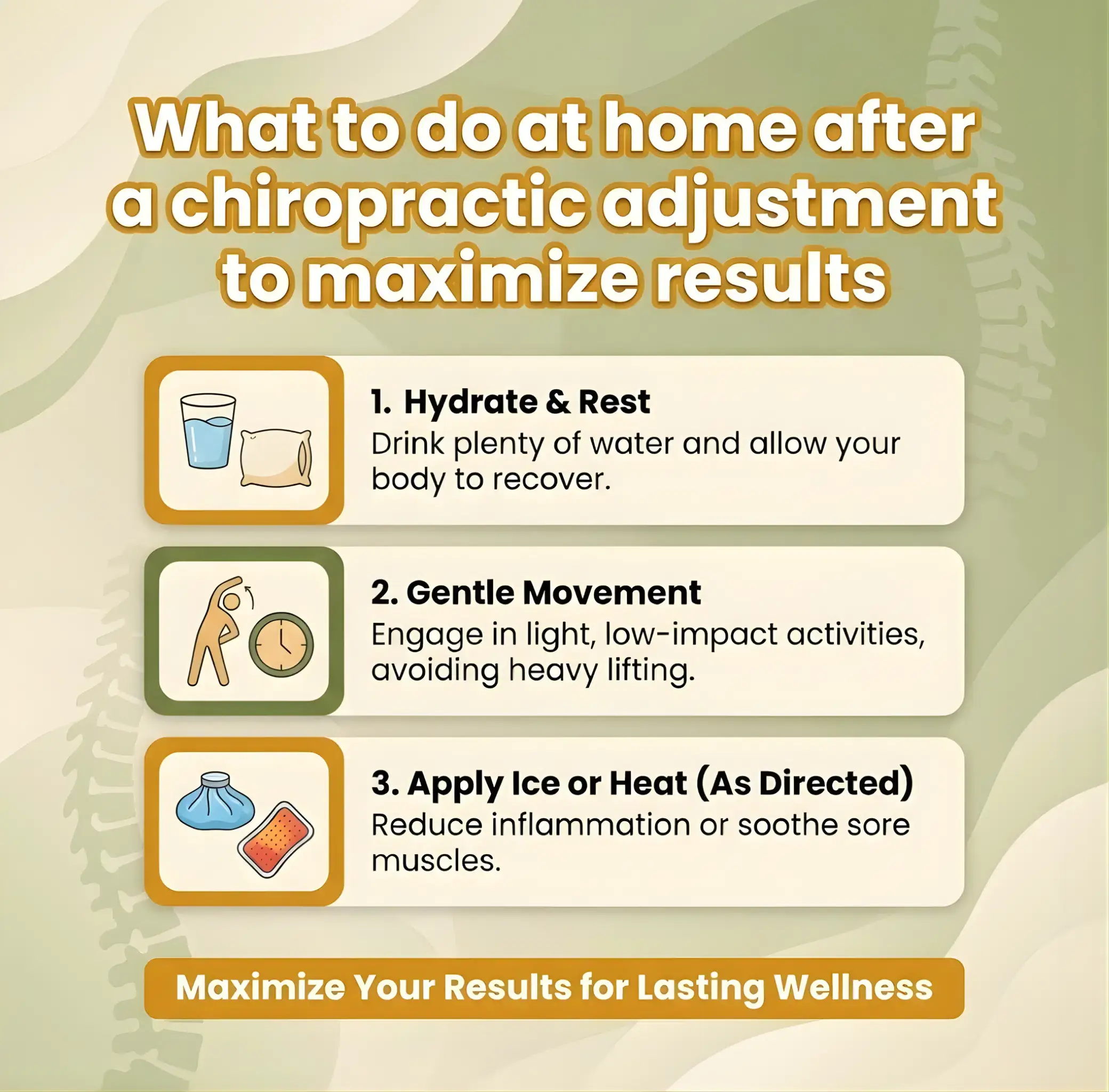
What to Do at Home After a Chiropractic Adjustment to Maximize Results?
What you do at home after a chiropractic adjustment can quietly determine whether that visit becomes a one‑off relief moment or the start of lasting change. Chiropractic care works by improving how your spine and joints move, which in turn influences how your muscles fire, how your nerves communicate, and how your body carries itself day to day. But that new alignment is fragile at first. Without thoughtful home care, old postures, habits, and stresses can pull you right back into the same patterns your chiropractor just tried to correct. This article walks you through practical, evidence‑informed steps you can take at home—rest, movement, hydration, sleep, posture, and stress management—so each adjustment has a real chance to “stick” and translate into measurable improvement over time.
Why Home Care Matters After an Adjustment
A chiropractic adjustment is not a magic reset button; it is a precise input into a complex system. When a joint is adjusted, the surrounding muscles, ligaments, and nervous system have to adapt to the new position. That adaptation takes time and repetition, and what you do at home in the hours and days afterward either supports that process or undermines it.
After an adjustment, many people notice that certain movements feel easier, their breathing feels deeper, or their posture feels lighter. These changes happen because joint motion improves, nerve irritation decreases, and muscle tension begins to unwind. However, if you immediately return to long hours of sitting, heavy lifting, or high‑stress environments, your body may quickly default back to its old, less efficient patterns.
Home care is where you reinforce the new alignment. Simple habits—how you sit, how you sleep, how you move, and how you manage stress—act like daily “practice sessions” for your body. Over weeks and months, those small choices add up to more stable joints, stronger supporting muscles, and a nervous system that is less reactive to everyday strain. In other words, the adjustment creates the opportunity; your at‑home routine decides how much of that opportunity you actually use.
First 24 hours: Rest, Gentle Movement, and Listening to your Body
How to rest without “freezing”
Complete stillness after an adjustment is rarely helpful. In fact, staying in one position for too long can increase stiffness and reduce circulation to the joints and muscles that just received treatment. Instead, the goal is “active rest”: light, low‑impact movement spread through the day, with frequent position changes and brief breaks from sitting or standing.
Walking is one of the simplest and most effective tools. Short walks of 5–10 minutes every few hours can keep joints moving without overloading them. If you sit at a desk, set a timer to stand up, shift your weight, or take a brief walk every 30–45 minutes. If you feel sore, lying on your back with knees bent and supported by a pillow or chair can take pressure off the lower back while still allowing gentle breathing and relaxation.
At the same time, it is important to avoid prolonged sitting, long car rides, or heavy lifting for at least the first 24–48 hours, unless your chiropractor has told you otherwise. These activities can place sudden or sustained loads on joints that are still adapting, which may increase soreness or undo some of the work done in the office. The balance is to move enough to keep things from stiffening, but not so much that you provoke sharp pain or excessive fatigue.
Gentle movement and simple home exercises
After an adjustment, your body often feels looser and more mobile. That is a good sign, but it also means the stabilizing muscles may not yet be fully “on board” with the new alignment. Gentle movement and basic exercises help teach those muscles to support the new position.
You do not need an elaborate routine. A few minutes of simple movements can make a difference. Slow neck turns and tilts—looking up, down, left, right, and side‑to‑side—can keep cervical joints from stiffening. Shoulder rolls and gentle shoulder blade squeezes help release tension that often builds around the neck and upper back. Knee‑to‑chest stretches or pelvic tilts on the floor can ease lower‑back tightness without forcing the spine.
If your chiropractor has given you specific exercises or stretches, treat them like prescribed “homework.” Doing them consistently for a few minutes each day reinforces the alignment and muscle balance created during the adjustment. Over time, these small sessions help your body learn that the new, more efficient posture is not just a temporary change but a new default.
When to slow down or stop
Some mild soreness, fatigue, or a temporary “achy” feeling after an adjustment is normal, especially if you have had long‑standing tension or misalignment. What is not normal is sharp, worsening pain, new numbness or tingling, or a sudden loss of strength.
If you notice pain that increases instead of gradually easing over the first day or two, it is a sign that something is off. New or spreading numbness, tingling, or weakness in an arm or leg can indicate nerve irritation or another issue that needs evaluation. Dizziness, severe headache, or any other unusual symptom after treatment also warrants a call to your chiropractor or another healthcare provider.
Paying attention to these signals helps you stay safe and gives your practitioner useful feedback about how your body is responding. If certain activities consistently trigger pain or discomfort, you and your chiropractor can adjust your home‑care plan or modify your exercise routine to keep you moving safely.
Hydration, Nutrition, and Recovery Support
Why water matters after an adjustment
Spinal joints and the discs between them rely on fluid to stay pliable and nourished. When joints move more freely after an adjustment, metabolic byproducts and inflammatory mediators can be released into the surrounding tissues. Adequate hydration helps your body flush these substances and maintain lubrication in the joints and muscles.
Aim to drink enough water so your urine is pale yellow and you rarely feel thirsty. For many adults, that means roughly 6–8 glasses (about 1.5–2 liters) per day, with more if you are active or live in a warm climate. Adding a pinch of salt or an electrolyte‑rich drink can help if you sweat a lot or feel fatigued, but avoid sugary sodas or excessive caffeine, which can dehydrate you.
Hydration is not a dramatic intervention, but it is a consistent one. Over days and weeks, staying well‑hydrated supports joint health, reduces muscle cramping, and helps your body recover more efficiently between adjustments.
Simple nutrition choices that support healing
Food does not replace chiropractic care, but it can either support or hinder recovery. Inflammation from a poor diet can make muscles and joints more reactive and sensitive after an adjustment.
Emphasizing whole foods such as vegetables, fruits, lean proteins, and healthy fats (nuts, seeds, olive oil, avocado) provides vitamins, minerals, and antioxidants that support tissue repair. Limiting highly processed foods, fried items, and excess sugar can reduce systemic inflammation and make pain and stiffness feel worse. If you drink alcohol, consider reducing intake in the 24–48 hours after an adjustment, since alcohol can dehydrate you and interfere with sleep and recovery.
You do not need a strict “recovery diet,” but small, consistent improvements in what you eat can make your body more resilient between visits. Over time, better nutrition can mean less soreness after adjustments, faster recovery, and a more stable baseline of comfort.
Sleep, posture, and daily habits
Optimizing Sleep Position and Support
Sleep is when your body does much of its repair work, so how you lie down matters after an adjustment. Poor sleeping posture can pull your spine back into the patterns your chiropractor just tried to correct.
Side sleepers often benefit from a pillow that keeps the head in line with the spine and a soft pillow between the knees to reduce strain on the lower back. Back sleepers can place a small pillow or rolled towel under the knees to take pressure off the lumbar spine. Stomach sleeping tends to twist the neck and flatten the natural curve of the lower back, so it is usually best avoided if you have back or neck issues.
If your mattress is sagging or feels very hard, consider whether it is time to replace it or add a supportive topper. A mattress that does not support your body’s curves can undo hours of careful alignment work. Even small changes in your sleep setup can make a noticeable difference in how you feel when you wake up.
Posture at home and at work
Even if you feel great after an adjustment, poor posture during daily tasks can gradually pull your spine and joints back toward old, painful positions.
When sitting at a table or desk, keep your feet flat on the floor, your knees slightly lower than your hips, and your back supported by the chair. Keep your screen at or slightly below eye level so you are not craning your neck forward. When standing, avoid locking your knees and try to distribute your weight evenly between both feet, with a slight bend in the knees.
These habits do not need to be perfect all the time, but doing them more often than not helps your body “learn” the new alignment your chiropractor is working toward. Over weeks and months, better posture can reduce strain on your spine, decrease muscle fatigue, and make each adjustment feel more sustainable.
Managing Soreness and Discomfort at home
Ice vs. heat: what to use and when
Some people feel sore after an adjustment, especially if they have had chronic tension or recent injury. Both ice and heat can help, but they serve different purposes.
Ice is generally better in the first 24–48 hours if there is noticeable inflammation, swelling, or sharp pain. It helps reduce blood flow to the area, which can calm irritation. Heat is often more useful after the first day, or when the main issue is muscle tightness and stiffness. It increases blood flow and can relax tense muscles around the adjusted joints.
A common rule of thumb is 15–20 minutes at a time, with a cloth between the skin and the ice or heat pack, and at least an hour between applications. Always follow your chiropractor’s specific guidance, since recommendations can vary depending on your condition. Using ice or heat appropriately can make the recovery window after an adjustment more comfortable and less disruptive to your daily life.
Over‑the‑counter options and when to ask for help
Occasional use of over‑the‑counter pain relievers or topical creams can ease discomfort, but they should not be the only strategy. If you find yourself needing medication every day or multiple times a day, it is a sign that something else—posture, activity level, or the treatment plan—may need adjustment.
If soreness lasts more than a few days, keeps coming back, or is accompanied by new symptoms, it is important to loop your chiropractor or another healthcare provider back in. Persistent pain is not something to “push through”; it is feedback that your body is still struggling to adapt. Addressing these patterns early can prevent small issues from becoming long‑term problems.
Exercise, activity, and long‑term habits
How to return to exercise safely
Many people want to know whether they can work out after an adjustment. The answer is usually “yes,” but with some important caveats.
In the first 24–48 hours, it is wise to avoid heavy lifting, high‑impact sports, or exercises that strain the area that was adjusted. Low‑impact activities such as walking, swimming, gentle cycling, or yoga can often be done in moderation and may actually support recovery by improving circulation and mobility. If you are an athlete or do intense training, consider cross‑training (switching to a different, less stressful activity) in the days after an adjustment rather than going straight back to your usual routine.
The goal is to move enough to keep joints and muscles from stiffening, but not so much that you provoke pain or undo the work done in the office. Over time, a balanced exercise routine that includes strength, flexibility, and cardiovascular work can make your spine and joints more resilient and less likely to slip back into old, painful patterns.
Building a routine that supports your adjustments
One adjustment rarely fixes a problem that has built up over months or years. Lasting results come from combining in‑office care with consistent at‑home habits.
A short daily routine of stretches and strengthening exercises tailored to your body’s needs can reinforce the alignment created during adjustments. Regular low‑impact activity such as walking, swimming, or cycling keeps joints mobile and muscles strong. Mindful posture checks throughout the day, especially when sitting for long periods or using a phone or computer, help your body stay in better alignment.
These are not “extra” tasks; they are part of the treatment. When you do them consistently, each adjustment has a stronger foundation to build on, and you are more likely to see meaningful, long‑term improvement rather than temporary relief.
Stress, breathing, and nervous system support
How stress affects your spine and muscles
Stress does not just live in your mind; it shows up in your body as muscle tension, shallow breathing, and altered movement patterns. When you are stressed, your shoulders creep up, your jaw clenches, and your lower back tightens, all of which can pull your spine away from its optimal alignment.
After an adjustment, managing stress becomes part of protecting the new alignment. Even if your joints are in a better position, constant tension can gradually drag them back toward old patterns. Over time, chronic stress can make your body more reactive to everyday strain, which can shorten the window of relief you get from each visit.
Simple breathing and relaxation practices
You do not need an hour‑long meditation practice to make a difference. A few minutes of intentional breathing can help your nervous system settle and reduce muscle tension.
A basic deep‑breathing exercise you can do at home involves sitting or lying in a comfortable position with your spine supported. Inhale slowly through your nose for about 4–5 seconds, letting your belly expand. Hold the breath gently for 2–3 seconds. Exhale slowly through your mouth for 5–6 seconds, feeling your chest and shoulders relax.
Repeat this for 5–10 cycles, especially when you notice tension building in your neck, shoulders, or back. Over time, these short breaks can reduce the chronic tension that undermines your chiropractic results. Pairing this with brief moments of mindfulness—pausing to notice how your body feels before and after an adjustment—can deepen your awareness of what helps and what does not.
When to Seek Help and How to Track Progress
Red flags and warning signs
Most people feel some mild soreness or fatigue after an adjustment, but certain symptoms should prompt you to contact your chiropractor or another healthcare provider.
Sharp, worsening pain that does not ease with rest and gentle movement is a red flag. New or spreading numbness, tingling, or weakness in an arm or leg can indicate nerve irritation or another issue that needs evaluation. Loss of bladder or bowel control is rare but requires immediate medical attention.
If you are unsure whether a symptom is normal, it is better to ask than to ignore it. Your chiropractor can help interpret what your body is telling you and adjust your care plan accordingly. Early intervention can prevent minor issues from becoming more serious and can keep you moving safely toward your goals.
Tracking how you feel between visits
Keeping a simple log can help you and your chiropractor see patterns over time.
You might note your pain level on a scale of 0–10 before and after each adjustment, how long relief lasts before symptoms start to return, and activities or positions that seem to trigger or ease discomfort. This information can guide decisions about how often to schedule adjustments, what exercises to emphasize, and whether other interventions (such as physical therapy or medical evaluation) might be helpful.
Over weeks and months, this kind of tracking can reveal what is working and what is not, allowing you and your chiropractor to fine‑tune your plan and move toward more stable, long‑term improvement.
Conclusion
What you do at home after a chiropractic adjustment is not a minor detail; it is a core part of your treatment. Simple steps—staying gently active, resting when needed, drinking enough water, moving with better posture, and managing stress—help your body hold onto the new alignment and use it as a starting point for lasting change.
No single habit will magically “lock in” an adjustment, but combining a few consistent practices makes each visit more effective and reduces the chances of falling back into old, painful patterns. By treating home care as an active part of your treatment plan, you give your spine, muscles, and nervous system the best possible chance to heal, stabilize, and function more comfortably over time.